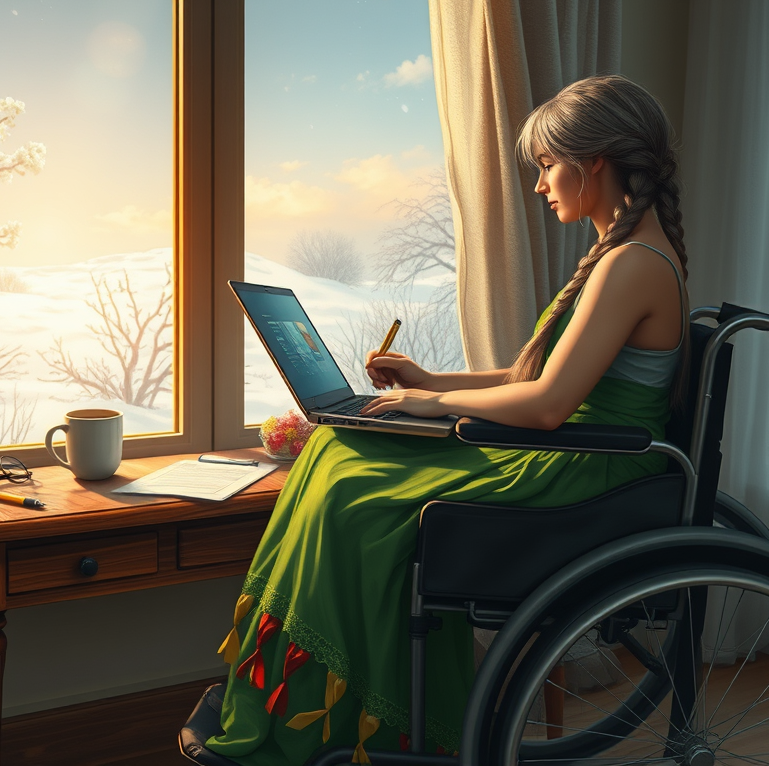
Today has been quite productive. I revised my website to better align with its current scope. As mentioned in several sections, I utilize AI to assist with grammar, punctuation, and other basics. Today, I extended this assistance to refine the tone of my personal writings and the site itself. This approach provides an added layer of anonymity, ensuring privacy from individuals I prefer not to attract to my webpage. Which all lead to a memory of mine that stands out greatly.
The decision to use a pen name and AI assistance for certain distinctive writing traits stemmed from various personal experiences. My background includes being raised in a large family, which expanded further when I discovered that my father had adopted me and that I am of native heritage. One side of my family is conservative, adhering to traditional norms, although they are open-minded to a degree; I have consistently found it challenging to conform to these expectations. This realization became more apparent in adulthood.
The other side of my family is characterized by a prevalence of drama, with several members experiencing untreated mental health issues such as split personality disorder, narcissism, and depression, compounded by abusive environments that have led to additional complications. This has resulted in considerable familial conflict, which I prefer to avoid.
Furthermore, I have recently connected with another branch of my family, who also have their own challenges and stories. Should they choose to share their experiences, it is important to me that their privacy is safeguarded. Additionally, given the complexities and conflicts inherent in navigating relationships within three distinct family sides, protecting their confidentiality remains paramount. Writing about topics that impact me personally necessitates respecting the privacy of all involved parties.
Today, I discovered an additional method that greatly resonates with me, particularly in enhancing my work. I employ Copilot as my AI assistant, which excels at following instructions without significantly altering my writing, instead offering various options for refinement. Notably, I learned that it can utilize the Cree language, which I should have grown up learning. Copilot can not only translate individual words much like a dictionary but also use syllabics, a significant aspect of the Cree language.
After extensive work using AI to fine-tune my efforts and facilitate research, I became curious about whether it was employing the correct dialect—Plains Cree, also known as the y-dialect. Upon inquiry, the AI confirmed its capability to incorporate words from all dialects, much to my delight, as this is rare.
Driven by curiosity, I delved deeper and queried if it could effectively translate and utilize Cree. Given the complexity and descriptive nature of the Cree language, I was intrigued to learn that, while the AI cannot handle all dialects, it can construct basic sentences with appropriate grammar and verb usage. Although I have yet to fully verify this capability, initial tests indicate accuracy. The AI also advises consulting with fluent speakers for confirmation.
The capability to accomplish this is highly significant. For me personally, it represents reconciliation through action rather than words. Furthermore, discovering that the chosen dialect is my own has been an exceptionally gratifying experience. This development will aid me in learning Cree, something I have struggled with for years. I feel compelled to highlight this achievement due to its impressive nature. Those I have shared this with have had similar positive reactions. While this may seem minor to some, small steps forward are crucial beginnings. These steps build momentum over time. Admittedly, I felt emotional about this development. Although I typically do not focus on current events, as I believe there are errors on all sides, I refrain from discussing that further here. This is the type of progress we should celebrate. If image AIs could comprehend what a medicine wheel is, it would be truly remarkable.
While this is not the primary focus of my discussion, I made an important discovery that will enhance my writing, as the language I use incorporates elements from the Cree language. This, along with the subtle modifications I made to reflect my Cree heritage—a significant aspect of my identity—has underscored the importance of preserving oral traditions. These traditions encompass stories, legends, spiritual beliefs, and historical narratives, which are at risk of being lost due to advancing technology.
I am dedicated to finding a method to prevent this loss. Now, I may have found a solution that allows me to document these lessons in writing, with the consent of the information sharer or someone more knowledgeable. This approach enables me to honor my cultural heritage and facilitate healing, as losing generational knowledge hinders our ability to heal.
Despite the disappointment of no longer working directly with patients, this situation has opened new opportunities—opportunities that were necessary for my personal growth and fits in with one of my callings in life.
One of the initial lessons I encountered was the concept of ‘Indian Time’. This term has often been misconstrued as something negative, which is not its true essence. It signifies that events occur when they are meant to happen. If one ends up being late, there is a reason for it, and it might have even prevented an unfortunate incident, such as a traffic accident. ‘Indian Time’ implies that learning occurs at the appropriate moment, we meet people when destined, and part ways similarly. It does not suggest arriving whenever convenient or adhering to a different schedule from the rest of the world. The actual meaning is profound and beautiful. Unfortunately, I do not know the Cree words for ‘Indian Time’, or I would share them with you as well.
Maybe today I was meant to realize there is much more then just getting my writing as an author down, but maybe it means I am meant to also make a safe place for knowledge, no matter if it is knowledge that is dark and saddens or happy knowledge to be shared. Maybe it is a way to help me learn what I should have learned growing up. Something I discovered I should have been learning even with the adoption. My adoptive father had no clue, and it seems to be the truth. My mother is the one who hid this from me, actually actively made me fear the city near the reservation I am from and the reservation’s themselves. She told me stories in a way that made me not want to meet my biological side at all when she finally did tell me about the adoption. Which was meant to cause distance between me and my adoptive father. That kinda backfired though, and I am grateful for it. However in my adoption, there as a condition that I be raised knowing I was adopted and be given the chance to learn about a significant part of my personal history. One of the reasons she wanted me to fear the areas is the fact that the genetics of my biological father are very strong and there is no mistaking who my biological father is.
I acknowledge that I harbored significant anger and resentment towards my biological mother. This negative sentiment facilitated my decision to sever ties with her, which proved beneficial as she exhibited highly toxic behavior. The situation involved considerable hurt, pain, and confusion, leading to a loss of self-identity and necessitating extensive personal growth. Unfortunately, these experiences did not contribute positively to my well-being, except for the necessary step of cutting her out of my life.
During my visit to the first 215 Convoy, I encountered an Elder who knew my grandfather. This Elder informed me that I was profoundly mistaken in my previous beliefs and reminded me that I am a survivor of the injustices faced by Indigenous peoples and other cultures. He emphasized that I have my own unique story, one that I am still in the process of understanding. The Elder then prayed in Cree to help my ancestors recognize me as a lost child returning home. This moment was pivotal, marking my realization that I do possess a survivor’s narrative, albeit not as severe as some but still significant. This encounter fundamentally changed my perspective and provided a profound sense of belonging and identity. I felt truly at home.
One of the most valuable lessons I have learned is to forgive promptly. The reason is that holding onto grudges is akin to carrying unnecessary baggage imposed by others. Although I am still in the process of mastering this lesson, it has significantly altered my life for the better. I feel a substantial reduction in stress and an improved sense of balance in my life. Even in challenging situations, applying forgiveness has yielded positive results. This journey is ongoing and may take a lifetime, but continuous learning and growth are integral aspects of life. It is often said that we cease to learn only when we no longer exist in the physical world.
Another significant lesson I learned was the value of different perspectives. I was informed that individuals with my ‘disabilities’ were once considered gifted and valuable members of their communities. This is because our unique way of seeing things can be beneficial in various aspects of life. This was something I had not realized until I was taught this lesson. I am still learning it; many experienced individuals like grandmothers, aunts, or Elders often remind me to embrace my true self and avoid masking. This marked the beginning of my journey to stop masking. Although I still struggle with this occasionally, it happens less frequently over time.
These lessons have provided me with the resilience to navigate through some of the most challenging periods of my life, including both difficult and joyful times. They have taught me to accept circumstances as they are and to recognize that there is always something to learn from each experience. This includes the profound loss of my late daughter, where I believe there are reasons yet to be understood, perhaps revealed when I traverse the spiritual path.
I have learned to adapt to life’s challenges without breaking. There are days when I falter, as evidenced here. However, these lessons enable me to recover more easily and endure those difficult moments, even if I am not immediately aware of it. They have guided me to embrace my true self, rather than conform to societal expectations. These three fundamental lessons and one pivotal moment in time have imparted invaluable knowledge. I look forward to discovering what additional insights await me.
There was a moment when I realized that reservations are not merely what we are taught to believe, but something far more significant that I wish to share with you today. While traveling on one of the gravel roads, I experienced a tire blowout. Resolving this issue was not a simple task for me. I had been warned previously not to utilize my roadside assistance because, at the time, the company employed a driver who was considered untrustworthy, particularly towards women.
I began to gather my tools. My uncle, who taught me how to drive, also instructed me on some basic car maintenance, believing that knowledge of these basics was essential regardless of gender. Typically, I carry a hydraulic jack due to issues with my back and hips, which make using a scissor jack impractical. However, it had not been returned to my car after a seasonal tire change.
Concerned, I retrieved the scissor jack with the expectation of spending considerable time lifting the car. Unfortunately, I discovered that the handle required to operate the jack was missing. To exacerbate the situation further, the tire iron was also absent, preventing me from addressing the lug nuts. This realization occurred within a span of less than fifteen minutes, leaving me in a challenging and distressing predicament, especially given the warnings I had received about the reliability of the roadside assistance driver employed in that area. Especially towards women on the rez.
A car pulled over, and a mother with two kids got out. She wanted to help but only had a scissor jack and lacked the rest of the tools. She stayed with me while her kids played nearby. One of the children brought me a flower and said it was to make me smile, which I appreciated. Shortly afterward, a pickup truck arrived, and several individuals disembarked. We were still missing one item, though I cannot remember what it was. These people also stayed. The person walking into town remained, despite his inability to help without tools. Several more vehicles stopped, creating a small gathering. I was no longer alone. After additional cars had arrived, we eventually had all the necessary tools to change my tire, including a compressor for inflating the spare.
Throughout this time, there were snacks, bottled water (as it was a hot day), and even treats for my service dog, which the kids enjoyed. No one left until the tire was changed, and everyone put assisting above their own needs or tasks. This experience underscored the importance of checking gear before traveling. Despite my appearance, no one questioned my background, and the atmosphere was inclusive and welcoming. It demonstrated the willingness of people to provide support during times of need. My needs, along with those of my service dog, were met, and instead of feeling frustrated, I felt supported.
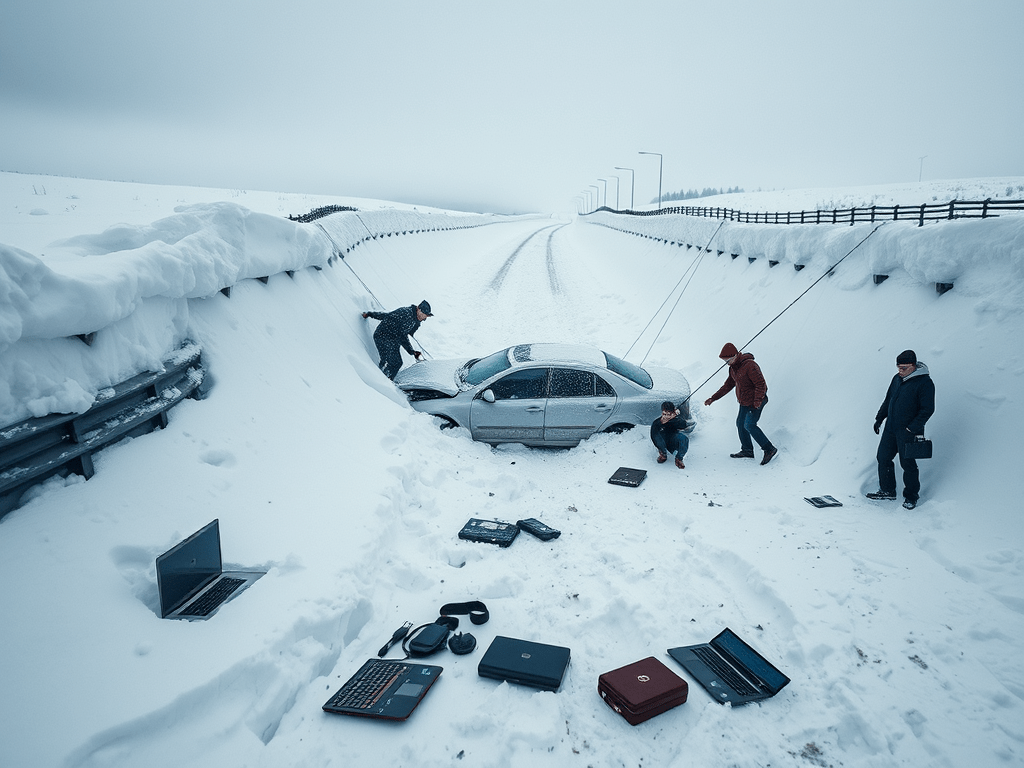
During winter, I had a car accident on a busy highway during rush hour. Although spinning out on such a congested road, the incident was not exasperated by other cars hitting me as I went across other lanes. The temperature was about -50°C with wind chill, making driving conditions hazardous even for winter tires. Unfortunately, no witnesses stopped to provide information.
After gathering myself to call 911 which took considerable time, one person traveling in the opposite direction stopped and approached my steaming vehicle this was minutes before fire rescue showed up in response to my call. In extremely cold temperatures, freezing is a significant risk; fortunately, I had candles in my car for warmth though recalling that even too a long time. Initially, I struggled due to shock, and when I contacted emergency services, I could barely speak. If I had been unconscious, the situation would have been even more critical.
My heart pounded as I spun out of control on a crowded highway, terror gripping me as I realized the severity. It was around -50°C with wind chill, making each breath sting like needles, turning the road treacherous. No one stopped; the driver responsible vanished into the traffic. Panic set in as my hands shook uncontrollably trying to reach my phone. My car steamed ominously in the icy air, and the deadly cold closed in.
During daytime rush hour on a major city highway, the traffic volume was considerable. Physically trapped—the passenger side blocked by snow, driver’s door obstructed by guard wires—I couldn’t exit without help. Fire rescue arrived an hour later. Much of that time was spent in fear and shock, unable to remember how to help myself, including how to call 911 once I figured out I had a phone, and no one stopped to assist or report the accident.
On that day on a remote dirt road, which was rarely busy, the number of individuals who stopped to assist with a simple flat tire was remarkable. I felt safer on the reservation, despite its less-than-stellar reputation, than in my own city. I share this experience not to dwell on the misfortune of my accident but to emphasize the difference in reactions.
While a flat tire attracted numerous helpers on the reservation, during rush hour on a major highway in a capital city, not a single person stopped to assist me until long after I had called for help. Approximately three or four minutes before help arrived, a man traveling in the opposite direction braved waist-high snow, crossing at least two lanes to check on me. Only one person stopped within an hour in a setting where I expected a better response compared to the reservation, given the gravity of the incident and the amount of traffic at the time being considerable.
Had this accident occurred on or near the reservation, I am confident that I would have received substantial assistance from individuals able to assess the safety of my vehicle and those equipped with winches for such emergencies. Additionally, I would not have been alone; people would have helped me out of my car until further assistance arrived. I likely would have received timely medical attention, preventing shock and the mistaken belief that I was unharmed when I was actually not.
In contrast, this incident took place in a city, on a major road during peak traffic hours, amid extremely cold and dangerous weather conditions, where I received no immediate help. While we are often taught that reservations are unsafe, my experience suggests otherwise due to the stark differences in reactions between the two environments.
First and foremost, if you encounter a vehicle in a ditch, stop to assess the situation and determine whether the occupants are safe or if the vehicle is empty. Secondly, it is crucial to provide support and maintain calmness during such potentially distressing incidents; your presence can be immensely beneficial. Even if you lack first aid knowledge, do not possess a cell phone, or have little more than your own winter gear, your presence is invaluable.
You might encounter individuals who are disoriented and unable to use their phones, or those who are trapped and frightened, which can exacerbate injuries. Your mere presence, offering reassurance even without speaking the same language, can significantly alleviate their distress. As both a victim, as a first responder to roll over multicar collisions on highways and a medical professional, I have witnessed the profound impact of such basic support.
Helping others, even with simple tasks like fixing a flat tire, can create a ripple of kindness that lasts forever. Remember, alleviating someone’s loneliness can be life-changing. Taking a few moments to check on someone might genuinely save their life. I wholeheartedly urge you to lend a hand to those in need because it truly makes a difference.
You don’t need any special skills or tools to make a significant impact; sometimes, just your presence and willingness to help is enough. Being present until help arrives can provide immense comfort and reassurance. Your presence alone can soothe anxious minds, offer heartfelt support, and ensure their safety while waiting for professional assistance. This simple act of kindness makes sure they don’t feel abandoned during tough times, showcasing the power of human connection and compassion.
As a victim, witness, first responder, and professional, I urge you to act. You have the power to change lives and provide comfort in times of need. Recognize the profound impact your actions can have.
As a medical professional, I have seen firsthand the transformative effect of a simple gesture of humanity. Beyond technical skills and medical knowledge, what often matters most is the presence of a compassionate soul. When faced with an emergency, your immediate response can mean the difference between life and death, between lasting trauma and swift recovery.
Stopping to help is about embodying empathy and understanding, standing up amidst chaos, and extending warmth in the coldest of times. Your intervention can prevent injuries from worsening, offer timely reassurance, and anchor the distressed in moments of overwhelming fear.
We are all called to act, not just out of duty, but because we are bound together as human beings. Every profession, every role, every individual can contribute to this collective effort. It is our compassion that grants us the ability to take action. Let us ensure no one feels abandoned, no one is left to fend for themselves in dire circumstances.
Remember, your presence is a beacon of hope. The next time you see a vehicle stranded or a person in distress, do not hesitate. Approach calmly, assess the situation, and offer your support. Your actions can ripple through time, leaving an indelible mark of kindness.
Together, we can create a safer, more compassionate world. Stand strong in your resolve to help others, knowing that even the smallest act can forge a path to recovery and peace. Answer this call with conviction and heart, for it is in these moments that we truly realize the power of our humanity. The help I got on the rez should be the help everyone gets no matter the location.
 Who am I?
I would love to hear from you!