
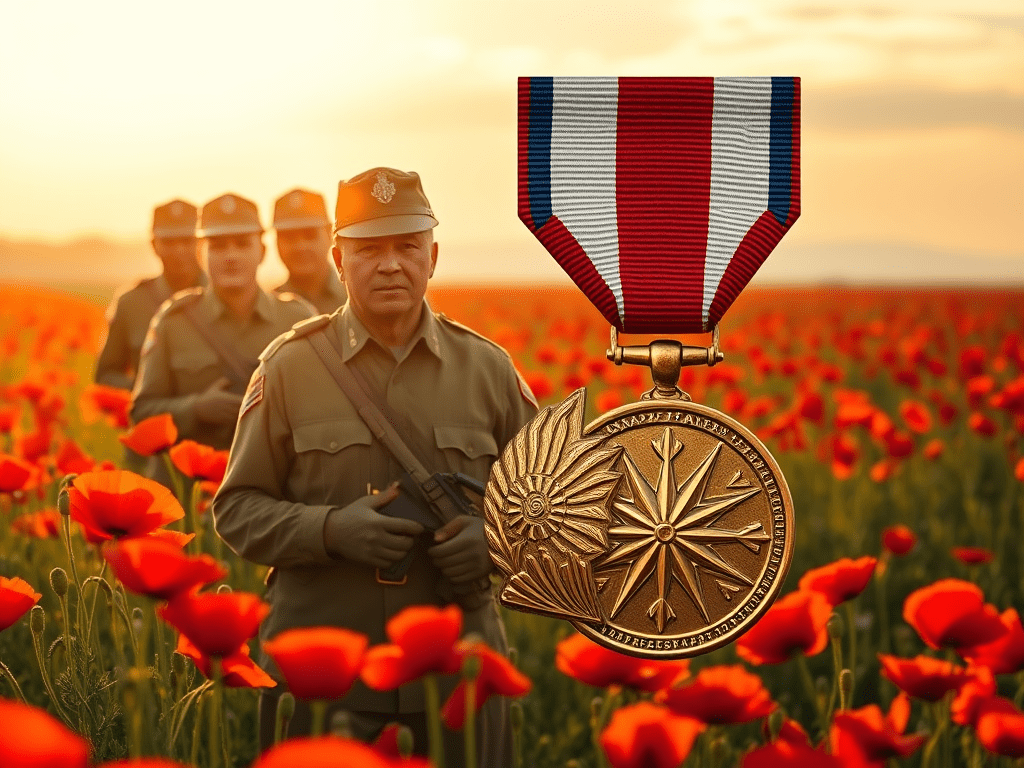
Imagine risking your life for your country, only to have your sacrifice erased from its history. This is the stark reality we face today as the contributions of the Navajo Code Talkers—a group of Indigenous heroes whose ingenuity and courage helped win World War II—are being struck from public records. Their language, their culture, and their lives were weaponized to protect a nation that, even then, marginalized them. And yet, their unbreakable code saved countless lives and turned the tide of a global conflict.
The Navajo Code Talkers were not just soldiers—they were cultural warriors whose language became an unbreakable lifeline during one of the most pivotal conflicts in history. Their code, crafted from the sacred intricacies of the Navajo language, has never been broken to this very day—a fact that underscores both its brilliance and its enduring significance. To strike their contributions from records is to deny the resilience, strength, and ingenuity that Indigenous communities have brought to a world that too often overlooks them.
Now, their legacy is under attack, as well as the legacy of war hero’s like Lieutenant Colonel Charles Calvin Rogers a recipient of the medal of honor who’s page has gone missing, it is our collective duty to remember.
When we allow history to be erased, it opens the door to further actions that diminish, silence, and erase marginalized voices. It sets a chilling precedent that demands attention, reflection, and action. Silence in the face of this loss is not neutrality—it is complicity.
The Legacy of the Unbreakable Code
At a time when Indigenous communities were not only marginalized but actively targeted by policies of genocide, the Navajo Code Talkers rose above unimaginable odds. Government actions sought to annihilate their cultures, languages, and identities entirely—treating Indigenous peoples not as citizens but as obstacles to be eradicated. They faced a brutal reality where their very existence was threatened, denied even the most basic recognition or rights.
Yet, despite this, these extraordinary individuals stepped forward with unparalleled courage to defend nations that had long sought their silence and destruction. Their choice to serve was an act of defiance, resilience, and a profound love for their people—including those who actively sought to destroy them, their culture, and their way of life. They served a country that had ripped their children from their arms, stripped them of their languages, and sought to erase their very existence. The Navajo language became a sacred shield on the battlefield, carrying with it the voices of ancestors and spirits. They took this sacred language—a cornerstone of their heritage and identity—and transformed it into a powerful, unbreakable code that saved countless lives.
In Navajo culture, as in most, if not all, Indigenous cultures, every sound, every word, and every combination of sounds carries spiritual meaning. Each is the name of a spirit, making their language a living prayer. This sacred connection to language is not unique to the Navajo but reflects a universal truth among Indigenous peoples: language is a bridge between the physical and spiritual worlds. By choosing to use this language in such a critical way, they not only safeguarded lives but also preserved and showcased their cultural identity in the face of attempted erasure—a profoundly defiant act against colonial systems.
For those of other faiths or traditions, this idea may resonate through parallels like the use of Latin in Roman Catholicism. Just as Latin serves as a universal language of prayer, invoking divine connection and guiding acts of faith, it carried the voices of divine invocation during moments of profound spiritual resonance. Similarly, in Islam, Arabic holds a profound spiritual significance, as the words of the Qur’an are considered sacred and are recited as an act of worship and divine connection. By using their language as the foundation of their code, the Navajo Code Talkers infused their mission with profound spiritual resonance, ensuring that their culture became not only a shield but a testament to endurance and strength.
The brilliance of their achievement is underscored by the fact that their code remains unbroken to this very day—a declaration to the ingenuity and sacred depth of their language. This unbroken code is regarded by modern cryptographers as an unparalleled feat in military history, one that stands as a testament to their resourcefulness and cultural genius. Yet, despite this, these heroes returned to a society that still viewed them as less than human. They were met not with gratitude or respect, but with the same systemic injustice, exclusion, and dehumanization that had defined their lives before the war. Tangible injustices, such as being denied veteran benefits and being subjected to continued assimilation policies, reinforced the profound disparity between their heroism and how they were treated upon their return.
Now, with the deliberate removal of their legacy from public records under Trump’s actions, history repeats its cruel pattern. This erasure not only diminishes their contributions but also perpetuates the injustice they faced in life. Heroes are not born—they are found in those who act not to change the hearts of people but to protect them, even those who wish to annihilate them. To erase their story is to deny the very essence of heroism and to silence a legacy that should inspire generations to come. As we reflect on their sacrifices, let us also bear the responsibility of ensuring that their legacy endures—not as a faint echo of the past, but as a living reminder of the power of courage, resilience, and cultural strength in the face of unimaginable adversity.
Erased Histories, Stolen Legacies: The Global Cost of Silencing Marginalized Voices
The deliberate erasure of history, such as the removal of the Navajo Code Talkers’ legacy from public records, is not an isolated act—it is part of a broader pattern that threatens the integrity of our collective memory. When the contributions of marginalized groups are erased, it is a form of violence, abuse, and invasion. It violates the dignity of those whose stories are silenced, abuses the truth by distorting or omitting it, and invades the collective memory of society, replacing it with narratives that serve the powerful while erasing the marginalized.
Imagine the Navajo Code Talkers as they stood on battlefields, armed not with weapons but with a language steeped in centuries of sacred tradition. Their unbroken code, carrying the prayers of their ancestors, saved countless lives and became a shield in the face of unimaginable danger. The brilliance of their contribution remains unmatched, yet their story—like the histories of so many marginalized groups—is at risk of being erased. This is not just an act of forgetting—it is an injustice that echoes globally.
The implications of this historical erasure extend far beyond the United States. Black, Latino, and Indigenous histories in America are intricately tied to global and cross-border struggles, particularly with Canada, whose history mirrors many of the same patterns of systemic injustice. Indigenous communities in Canada have long faced policies of cultural genocide, from residential schools to the ongoing erasure of their languages and traditions. Similarly, the struggles of Black Canadians, shaped by the legacies of slavery and systemic racism, reflect shared challenges with Black Americans in confronting inequality. The Latino experience highlights the broader realities of migration, xenophobia, and resilience that resonate across borders. The deliberate erasure of these histories within any one country reverberates worldwide, undermining efforts to acknowledge and address systemic oppression wherever it exists.
This erasure is not just about rewriting history—it is about stripping future generations of role models, lessons, and inspiration. The Navajo Code Talkers’ story, for example, is not just a tale of American resilience—it is emblematic of how marginalized communities worldwide contribute to collective progress, often at great personal cost. To erase such stories is to deny our shared humanity and the interwoven tapestry of cultures and histories that define us as a global society.
Moreover, this erasure feeds into the rise of revisionist histories and the weaponization of misinformation. By distorting the past, it weakens our ability to address present injustices and undermines efforts to build a more equitable future. It sends a chilling message to marginalized communities: that their contributions, no matter how profound, can be erased at the whim of those in power. This is not just a betrayal of those whose stories are erased—it is a betrayal of our collective obligation to uphold truth and justice.
The danger lies not only in what is erased but in what is allowed to replace it. When the stories of marginalized groups are removed, they are often supplanted by narratives that reinforce dominant ideologies and perpetuate systemic oppression. This is not just a loss for the communities directly affected—it is a loss for humanity as a whole. We lose the opportunity to learn from the strength and resilience of those who have faced unimaginable adversity, and we risk repeating the mistakes of the past.
To combat this, we must actively preserve and amplify the stories of marginalized groups. This is not just about honoring their contributions—it is about safeguarding the truth for humanity’s collective well-being. The Navajo Code Talkers, Black civil rights leaders, Latino activists, and Indigenous knowledge keepers in both the United States and Canada have all shaped the fabric of global society in profound ways. Their stories are not just their own—they belong to all of us, transcending borders and binding us together in the shared pursuit of justice and equality.
The erasure of history is a call to action. It demands that we remain vigilant in the face of efforts to silence marginalized voices and distort the truth. It challenges us to recognize the interconnectedness of our struggles, from the United States to Canada and beyond, and to stand together in defense of a shared history that reflects the full spectrum of human experience. Only by doing so can we honor the past, confront the present, and build a future that is truly just and inclusive.
Erasing History, Silencing Heroes: What We Stand to Lose
Now, with DEI policies affecting the military and drawing attention to the Navajo Code Talkers’ legacy, we are witnessing the alarming implications of these actions. The attack on DEI programs exposes the deeper agenda of opening doors to further destruction of history—a future in which the stories of courage, sacrifice, and resilience of marginalized communities are systematically removed from collective memory. It forces us to confront the unsettling question: What is next to be erased?
Will the honors bestowed on service members, earned through unimaginable sacrifice, be the next to face scrutiny? Consider the Purple Heart, an award given to those wounded or killed in the line of duty—will it one day be stripped from individuals who don’t meet an exclusionary standard of “perfection”? Or the Distinguished Service Cross, Navy Cross, and Air Force Cross—decorations granted for extraordinary acts of heroism in the most harrowing circumstances—will their recipients be deemed less worthy because of the marginalized communities they represent? Even the Medal of Honor, the nation’s highest military decoration for valor, could be called into question under this unsettling trajectory.
Take, for example, the story of Lieutenant Colonel Charles Calvin Rogers, a Black U.S. Army officer who received the Medal of Honor for his extraordinary bravery during the Vietnam War. In 1968, while commanding the 1st Battalion, 5th Artillery Regiment at Fire Support Base Rita, Rogers faced relentless attacks from North Vietnamese forces. Despite being wounded three times, he continued to direct artillery fire and lead counterattacks, ultimately repelling the enemy and saving countless lives. His actions exemplify the highest ideals of courage and selflessness. Yet, in a deeply troubling development, Rogers’ Medal of Honor page was recently removed from the Department of Defense website. The justification? Compliance with new DEI-related directives.
This is not just an oversight—it is a stark warning. Removing the legacy of someone like Lieutenant Colonel Rogers is a symbolic act of erasure, one that not only disrespects his sacrifice but also diminishes the values he fought for. If even the story of a Medal of Honor recipient can be erased under these circumstances, whose legacy is safe? Who will be remembered? And who will be forgotten?
These awards are more than symbols. They are the embodiment of bravery, selflessness, and sacrifice. They are the stories of service members who put their lives on the line not for themselves, but for their country and for their fellow citizens. These awards represent values that transcend race, gender, sexuality, and background—they are the ultimate testament to the ideals that unite us. To question or erase the legacies of those who earned them would not only dishonor the individuals but also unravel the moral fabric of the United States itself.
This issue resonates not just within the U.S., but across the globe, where similar struggles to preserve histories of marginalized communities exist. Consider the stories of Canada’s Indigenous knowledge keepers, who resist erasure through the reclamation of languages and traditions once suppressed by residential schools. Or the defiance of apartheid-era freedom fighters in South Africa, whose legacies endure despite decades of systemic oppression. These international parallels highlight a shared truth: when the voices of marginalized people are erased, the lessons of history are lost, and progress is stalled. The ripple effects of erasure in one nation impact movements for justice worldwide, weakening the global fight for equity and human dignity.
We must ask ourselves, as citizens of a nation that prides itself on honoring its military: Are we prepared to allow this? Are we willing to let future generations forget the sacrifices that define our freedoms because their stories no longer fit a manipulated, exclusionary version of history?
The chilling truth is this: history has shown us time and again that erasing the stories of marginalized groups paves the way for the repetition of oppression. As the saying goes, “Those who forget history are doomed to repeat it.” By removing these histories and symbols of service from public consciousness, we risk perpetuating the same injustices that these communities and individuals fought so hard to overcome.
A Call to Courage: Standing Together to Preserve Our Future
As a proud Cree woman and Canadian citizen, I carry the stories of resilience, strength, and sacrifice that define my people. These stories are not just history—they are a living testament to the endurance of marginalized communities in the face of systemic erasure. When I was younger, I dreamed of serving in the military, specifically with the Princess Patricia’s Canadian Light Infantry (PPCLI). That dream was cut short when I couldn’t pass the medical requirements, and it was a heartbreak I carried for years. The story of the Navajo Code Talkers lit a fire in me, inspiring me to want to serve in live battle as my ancestors did, despite the injustices First Nations people endured then—and still endure today. That fire has never truly gone out, and the heartache of being unable to serve still lingers within me.
When I learned of the removal of Lieutenant Colonel Charles Calvin Rogers’ Medal of Honor page—an act that desecrates his extraordinary legacy—I cried. The heartbreak of that knowledge kept me up at night, tossing and turning, unable to rest as I tried to think of how I, as a Canadian citizen, could act to draw attention to this growing horror. It felt personal, as if this wasn’t just the erasure of a hero’s sacrifice, but an attack on everything I once aspired to and everything I hold dear. That fire within me blazed once more, a call to fight reignited in my heart. This is not just about Rogers, the Navajo Code Talkers, or any one individual—this is about the very soul of our shared history and the ideals we claim to uphold.
The White House itself, that iconic symbol of democracy and freedom, carries scars of its own. Burned by British forces during the War of 1812, it was painted white to cover the blackened remains of its walls. That white paint became a symbol of resilience—a way to rebuild and move forward. But what happens when we forget the scars beneath? What happens when we paint over them so completely that we no longer remember they were ever there? The erasure of stories like those of the Navajo Code Talkers and Lieutenant Colonel Rogers is no different—it is an attempt to paint over the scars of history, to make us forget the lessons we so desperately need to carry forward.
This is exactly what historical erasure does—it doesn’t just rewrite the past; it destroys the lessons we need to carry forward. And it’s impossible not to draw parallels to one of history’s darkest chapters: Adolf Hitler’s regime. Hitler’s rise to power was marked by the systematic erasure of marginalized groups, the rewriting of history to fit his narrative, and the silencing of dissent. He weaponized propaganda, targeted communities he deemed “undesirable,” and manipulated public perception to further his genocidal agenda. The chilling echoes of these actions can be seen today in the erasure of marginalized voices, the dismantling of DEI initiatives, and the rewriting of history to serve those in power.
As a Canadian citizen, it is even more alarming to see how these actions are already reaching across borders, threatening to undermine the progress and stories of marginalized communities worldwide. Canada, often perceived as militarily weaker by the United States, has been a steadfast ally and partner in defense. Canadians have contributed significantly to the development of U.S. military programs, including the training program for the Navy SEALs. This collaboration has forged a bond of mutual respect and shared purpose. Yet, actions like Trump’s withdrawal from the United Nations and the Geneva Convention threaten these bonds, isolating the United States from its allies and undermining the principles of multilateralism and cooperation that have kept the world stable. The ripple effects of these decisions are profound, eroding trust, destabilizing alliances, and jeopardizing the collective progress we’ve made toward justice and equality.
To me, this is more than political. It is deeply personal. As someone who once dreamed of serving my country, this attack on the legacies of heroes like Rogers and the Code Talkers feels like an attack on the very values I sought to protect. As someone who belongs to a community that has already lived through the pain of erasure, I know all too well how this horror begins. I REFUSE to let this happen again. I will not remain silent. Silence is complicity, and I will not be complicit in this horror. The stories of the Navajo Code Talkers, Lieutenant Colonel Rogers, and countless others must not be erased. Their legacies are not just their own—they belong to all of us. They are the scars and the strength that define who we are.
It is with these thoughts, these nightmares I see hurtling toward us, that I choose, inspired by a song I heard some time ago, with the fire within my heart to defend raging once again, to stand as a warrior with “forgiveness as my bow, prayers as my arrows, and compassion as my shield. Bullets, arrows, and cannonballs will not save us. The only weapons that matter in this battle are truth, faith, and compassion.”
This is my call to action: I urge you, all our warriors, to pick up these same weapons. Let forgiveness guide your aim, let prayers strengthen your resolve, and let compassion shield you from despair. Bullets and cannonballs will not save us from this battle. Only truth, faith, and compassion can. Together, we must fight this erasure before it gets worse. Together, we must ensure that these stories, these legacies, are never erased. I call to all the warriors—the ones sent during our darkest hours—to answer the call with these weapons now, instead of later, when the damage is even more profound and the start of another world war begins. We need to end this now. The planet will not survive what Trump is doing.
I stand up, do you?
 Who am I?
I would love to hear from you!