The Creative Hours
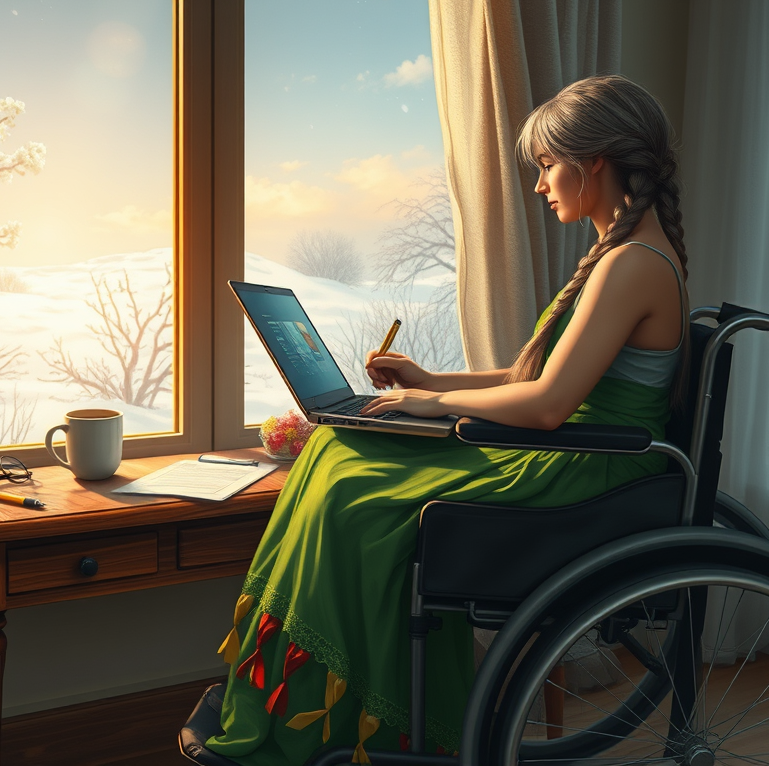
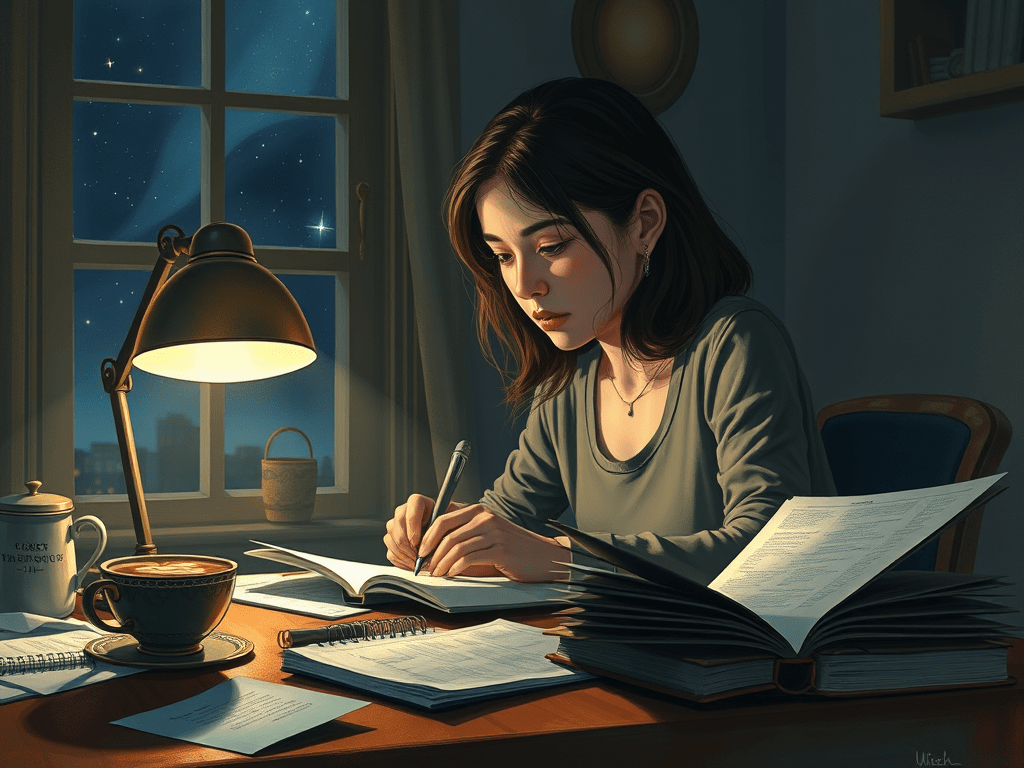
It’s 2:00 AM, and the world outside my window is still. Most people are fast asleep, their dreams swirling in the depths of the night. Yet here I am, wide awake, fingers tapping against the keys, trying to untangle the threads of a story before they slip away like morning mist. Why do we do this to ourselves? What is it about being an author that seems to naturally lead to unconventional, and frankly bizarre, working hours?
For me, it begins with the muse. Creativity is a fickle visitor—it doesn’t always knock politely during regular business hours. Instead, it sneaks in unannounced, often when the house is quiet, and distractions are few. It’s like a cat that refuses to come when you call but suddenly appears when you’re in the middle of something else, demanding your undivided attention.
There’s also something about the night that inspires introspection. Stories often come from the deepest, most vulnerable parts of our being. The darkness has a way of encouraging honesty—it wraps you in a quiet cocoon, where it’s safe to explore emotions, memories, and ideas that might seem too raw in the light of day. Plus, there’s no one around to judge your creative quirks, like pacing in circles while muttering dialogue or googling things that might alarm your internet provider.
The Science of Nighttime Creativity
Interestingly, science offers some insights into why creativity might feel stronger at night. During the day, our brains are in a state of high alertness, focused on logical thinking and problem-solving. This is great for tasks like balancing a checkbook or figuring out how to assemble IKEA furniture. But it can stifle the free-flowing, imaginative thinking that fuels creativity. At night, as we grow tired, our brains become less inhibited. This relaxed state allows for more divergent thinking—the kind that helps us make unexpected connections and come up with novel ideas. Essentially, it’s like your brain’s inner critic goes to bed early, leaving the party open for your wildest, wackiest thoughts.
The Toll on Routine
Let’s not forget deadlines—they’re the other reason authors might find themselves working at odd hours. Whether it’s a self-imposed goal or one set by an editor, deadlines have a way of turning night owls into nocturnal creatures. There’s a unique kind of adrenaline that comes with racing against the clock, even if it means sacrificing sleep to get the words just right. Procrastination might not be a productive writing strategy, but it sure is consistent.
And then there’s the classic case of “bedtime inspiration.” Have you ever had a brilliant idea strike just as you’re about to drift off to sleep? You lie there debating: should I write this down or trust it’ll still be there in the morning? Spoiler alert: it never is. So, you sigh, fumble for a notebook or your phone, and jot down the thought. And before you know it, you’re writing paragraphs, completely forgetting your plans for sleep. Congratulations—you’re now an unpaid intern for your own brain.
For me, the randomness of it all is part of the charm—but also the challenge. When I’m working on my novel, time just seems to disappear—poof! Hours vanish, dinner grows cold, and suddenly it’s past midnight. Poetry is even more unpredictable; ideas strike whenever they please, like a thunderstorm rolling through on a sunny day. And inspiration for this very page? It often springs from the most unexpected moments. Something someone says—or even something I say in a conversation—sparks the idea, and there’s no holding it back.
But there’s a darker side to such unpredictability: the toll it can take on routine and self-care. For me, random hours can wreak havoc on medication schedules, leading to late or missed doses. And then there’s food—or the lack of it. My creative streaks can leave me grabbing only a handful of nuts or whatever’s within reach, skipping proper meals until I realize I’m on day two (or three) of letting hunger slip quietly into the background. It’s a reminder that while the muse may call the shots, self-care is an equally important part of the process—even if it means setting reminders to eat between paragraphs.
Reading: Another Trap for Time
And it’s not just writing that does this—reading can have the same effect. Authors, for some reason, seem to lose track of time just as easily when they pick up a book. What starts as a quick break to recharge can turn into an all-night marathon, flipping pages until the sun peeks over the horizon. Last night was one of those nights for me. I told myself I’d read just one chapter, but before I knew it, the birds were chirping, and it was time to start the day again.
Science suggests this might be common among creative minds. When we read, our brains engage in a process called “narrative transportation,” where we become so immersed in the story that we lose awareness of our surroundings and the passage of time. For authors, who are naturally attuned to storytelling, this effect can be even more intense. Add to that the sensory overload of vivid imagery, emotional highs and lows, and the sheer joy of a well-told tale, and it’s no wonder we get swept away.
Finding Balance and Inspiration
As I write this, I’m reminded of the Plains Cree teaching of sâkihitowin—the act of caring and love. Perhaps that’s what strange writing (and reading) hours boil down to: a deep care for the stories we’re telling, a love for the craft, and a commitment to bringing our creative visions to life, even if it means losing a few hours of sleep (or forgetting to eat) along the way.
That said, balance is vital. Whether it’s setting alarms for meals, keeping snacks within arm’s reach, or even jotting down ideas to tackle the next day, self-care can be woven into the fabric of creativity. After all, a well-nourished, well-rested author can bring even greater brilliance to their craft.
Your Turn
So here’s to the midnight scribblers, the 3:00 AM daydreamers, and the sunrise storytellers. May we find beauty and inspiration in the stillness of unconventional hours—and may our words light up someone else’s day (while our coffee addiction lights up ours). What’s your relationship with time when creativity strikes? Do you lose yourself in the flow, too?
While I eagerly await to read your response I am going to go have a nice long nap. Last night was one of those midnight oil nights.
 Who am I?
I would love to hear from you!