
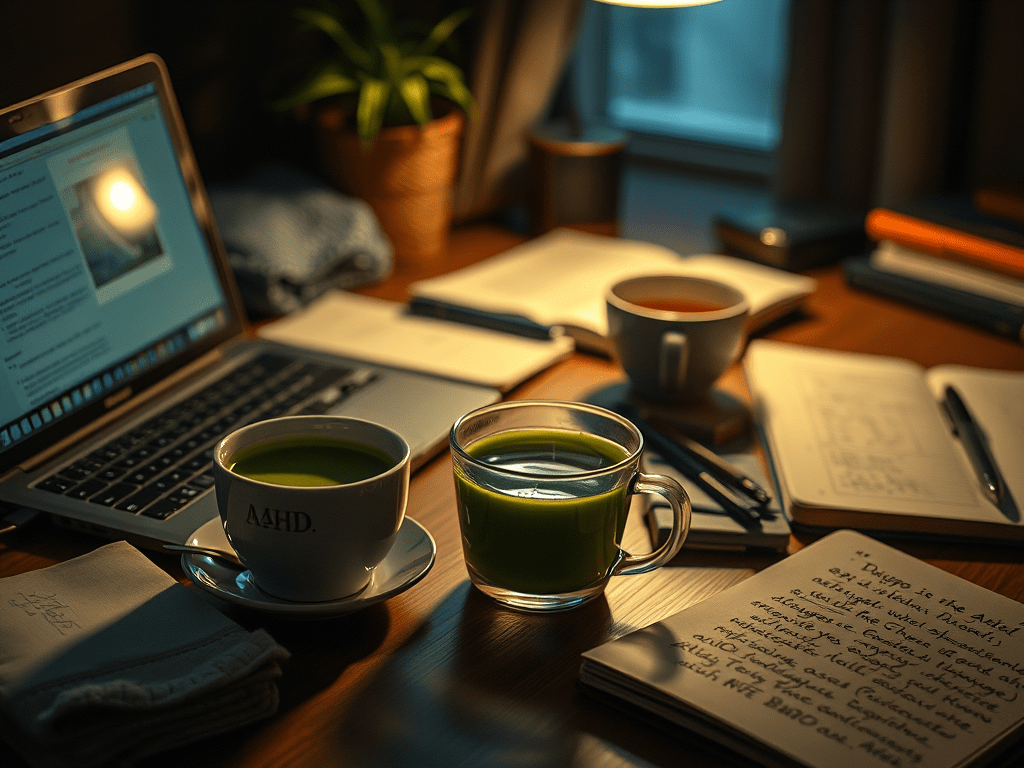
ASD and ADHD are topics I frequently mention, but today I want to take a closer look at how these aspects of neurodiversity shape my daily life and writing. Humor often helps me navigate the challenges, and it is a vital tool when dealing with the unexpected. Read till the end you will see why humor is so vital and a true horror story.
Coffee is an interesting starting point because, for many, it’s a lifeline for focus and productivity. For those with ADHD, however, it can have a sedative effect instead of the usual energy boost. This simple difference offers a fascinating insight into how these conditions influence even the smallest aspects of life.
Coffee and Late-Night Creativity
Coffee—it’s supposed to be the holy grail of productivity, isn’t it? For most people, it’s their go-to fix for banishing grogginess and boosting focus. For those of us with ADHD, though, it’s a completely different story. Instead of firing up my brain, coffee calms it down, thanks to its sedative effect. While that might sound relaxing, it often results in my keyboard looking suspiciously like a nap-worthy pillow.
In my ADHD-fueled experiments with caffeine, energy drinks were a phase. Let’s just say my body wasn’t too thrilled with that decision, and I quickly realized it was a habit that came with negative side effects. These days, I’ve shifted gears to matcha tea. It doesn’t deliver the energy kick most people rave about, but I drink it for its flavor, its routine, and the health benefits it quietly delivers. At this point, it’s less about the caffeine and more about tricking my brain into thinking I have my life together.
So, how do I tackle those late-night bursts of creativity—when the world is quiet, and my brain is buzzing with ideas? Honestly, it’s sheer force of will. Once I sit down and open my laptop, the words start flowing. The trick is pushing past the inertia to get there. For me, this has become a nightly dance of coaxing my brain into action without caffeine’s help.
If you’ve cracked the secret to tackling late-night writing hurdles—or have tips that work for boosting focus during low-energy moments—let me know. Do you rely on routines, snacks, or calming rituals? Share your wisdom in the comments—I’m willing to try just about anything that doesn’t involve energy drinks. My body has already made its feelings on those crystal clear.
Balancing Routine and Chaos with ASD and ADHD
Living with both ASD and ADHD feels like wrangling two unruly housemates who can’t agree on anything. One thrives on order and routine, while the other happily tosses the to-do list out the window and chases shiny distractions. It’s an ongoing tug-of-war, and when these two clash, the result can be sensory overload—the kind that sneaks up on you and knocks you flat.
Sensory overload isn’t always dramatic or obvious. It’s not like the TV tropes of rocking back and forth or dramatic outbursts, though I do rock when things get severe—it takes a significant amount of overload for me to get there. Overload can feel like my brain is short-circuiting. Sometimes, I wake up thinking, “Oh, they’re getting along today. This will be a good day.” Then, I make my morning drink, and the sound of the fridge turning on suddenly makes me realize I’ve been overloading since before I even opened my eyes. Other times, it hits for no discernible reason, likely because the competing forces of ASD and ADHD don’t need logic when they’re sharing the same brain.
If there’s one piece of advice I can give about being around someone in overload, it’s this: don’t touch me unless I invite you. Physical contact feels like an electric shock when I’m already overwhelmed, and communication should be kept simple. One-word answers are ideal—if I can even talk at all. Handling overload is a whole topic in itself, and I’ll dive into that more in a bit. For now, let’s just say minimizing external input is key until the storm passes.
When my brain finally gets to reset, it often happens in the most basic way—sleep. The moment I feel safe, my body makes the executive decision to shut down, whether I like it or not. There’s no arguing with it; it’s lights out, no questions asked. This is where Peace, my service dog, becomes my lifeline. Without her, I’d feel a lot less safe in those moments. She knows exactly what to do when overload strikes. All it takes is a single word—“lead,” “safety,” “door”—and I can trust her to guide me to where I need to go. I simply follow her tail, and she takes care of the rest.
The leash you see on a service dog is more than it appears. It’s like an extension of our communication, almost like body language. I can even tell the difference when I use a different leash—her demeanor shifts, and the subtle connection we share feels slightly altered. Peace is more than just a helper; she’s my anchor when everything else feels like it’s spinning out of control.
Driving with a Different Perspective
Driving is one of the few places where my ASD and ADHD work together seamlessly. It’s almost like they’ve called a truce behind the wheel. My ASD brain thrives on spotting patterns and mentally mapping out every possible “out” in case something goes wrong. My ADHD brain, on the other hand, keeps me hyper-alert and ready to react instantly. Together, they create a system that’s so ingrained, I don’t even realize I’m doing it anymore. At all times, I know my escape routes—ideally more than one.
This hyper-awareness has saved me more than once. I remember one particular accident where it made all the difference. The other driver had been pulling reckless stunts far behind me, and I’d already flagged them as a problem. By the time they caught up, I had a plan. I positioned myself behind a school bus, thinking it would deter any dangerous behavior. Unfortunately, it didn’t stop the inevitable usually it does though. The accident happened, but because I’d spotted the pattern early, I was prepared even if it was more subconscious because these driving behaviors are so ingrained into my driving of any vehicle.
When the moment came, I knew exactly what to do. Engaging the clutch disconnected the engine from the wheels, giving my brakes one less thing to fight against. Thank you, basic physics, for making that possible. For those unfamiliar, this is a critical move in manual cars—it allows the brakes to work more effectively by stopping the transfer of power from the engine to the wheels. Even in automatics, you can quickly shift into neutral by simply bumping the gear shift—no need to pull a lever or press a button. This small action can be life-saving in emergencies.
I also intentionally locked my brakes, which might sound counterintuitive, but in snowy and icy conditions, it can be the best option. ABS (anti-lock braking systems) often prevent this, but I’ve learned to work around it. My car—a trusty Honda Civic—has a weak ABS system, and I’ve picked up on patterns to override it when necessary. Honestly, I’d happily remove ABS from any car I own. If you don’t know how to pump your brakes manually, you’re going to find yourself in trouble in conditions like these. Sometimes, locking your wheels is the only way to regain control.
Here’s the thing: I grew up around people who rally race in the mountains during winter for fun. Yes, fun. Amazing what tricks you can pick up when you’re surrounded by drivers who think snow and ice are just added challenges to their playground. Many of the “old-school” techniques I use come from watching them, often without even realizing I was learning at the time. Sure, some might call these methods outdated, but if they didn’t work, why would so many drivers—especially those in extreme conditions—still swear by them? It’s a testament to the value of instinct and experience over pure reliance on technology.
While modern innovations like ABS have their place; just not in a place where half the year is winter, I stand by the idea that in some situations, knowing how to take matters into your own hands (or feet, in this case) can make all the difference. Locking your wheels, pumping your brakes manually, and having the confidence to navigate tough conditions with calculated precision aren’t just survival skills—they’re the reason I’ve been able to handle situations like that accident as well as I did.
The injuries I sustained in that accident were significant, but they could have been far worse. Spotting the danger early and having a plan in place made all the difference. In weather like that, most people would need something as critical as a STARS rescue to stand a chance. My preparation—and the rare teamwork between my ASD and ADHD—helped me navigate the situation as safely as possible.
There’s a phrase I’ve seen a lot lately, and while it might feel overused, it rings true: ASD is my superpower. Behind the wheel of a 3,000-pound weapon (because let’s face it, that’s what cars are when you think about the number of deaths from accidents), this superpower becomes even more apparent. My ability to spot patterns, anticipate chaos, and react quickly isn’t just a skill—it’s a survival mechanism. Paired with ADHD’s hyper-focus in critical moments, it’s a combination that turns what some see as a “disability” into a unique strength.
The Growing Understanding of AuDHD
In many circles, the term “AuDHD” has been gaining traction, reflecting the unique overlap between autism (ASD) and ADHD. It’s more than a catchy label—it highlights just how different life is when you’re navigating the interplay of both. What works for someone with just autism, or just ADHD, rarely hits the mark for those of us managing the constant tug-of-war between the two.
Honestly, it’s a recipe for frustration, overload, and occasionally, hilarity. If I didn’t learn to laugh at some of these quirks, I wouldn’t be able to handle day-to-day life with any sort of reliability.
I came across the term “AuDHD” a few weeks ago, courtesy of a podcast that opened my eyes. Hearing it for the first time was a lightbulb moment—a realization that this is a learning who i am point yet again. Yup, there’s that nod to the website name. It couldn’t be more true: we are constantly learning who we are, no matter how different or “normal” we might seem.
For me, understanding AuDHD has been a game changer. It explains so much about why typical strategies don’t work, why I experience the world the way I do, and how to start adapting in ways that actually make sense for my mind.
Take, for example, when people say things like, “Just breathe” or “Relax.” Please, for the love of all that is good in the world, never say that to someone dealing with a psychological issue flaring up. We’re already trying, and those phrases come off as condescending at best. At their worst, they amplify that nagging feeling of failure society so often imposes on those who dare to be different.
Instead of helping, they push you further into frustration. So, if you’re ever tempted to offer this kind of advice, just… don’t.
Thriving Beyond Fixes and Blowing Up Boxes
Here’s the truth: screw finding fixes. I don’t need to be fixed, and I never did. The word itself implies brokenness—a mentality that has no place outside of history books. Instead, I live by the philosophy “Identify, Adapt, Overcome,” a saying often associated with military resilience.
While it’s widely recognized in the U.S. Marine Corps, its principles resonate deeply across military forces, including the Canadian military. It’s a mindset that perfectly encapsulates what life with AuDHD looks like. Identify the areas where I struggle. Adapt my approach to fit those challenges. Overcome the hurdles in a way that works for me.
This isn’t about conforming or becoming someone I’m not—it’s about thriving without the weight of a broken narrative hanging over my head. And when it comes to blowing up the boxes society loves to stuff us into, I’ve found that education is the ultimate tool. So, here I am, at it again, challenging perceptions and encouraging others to rethink what they know. Maybe the pieces of those broken boxes will pave the way for something a lot more worthwhile.
This philosophy also aligns with Cree teachings, which emphasize observing and understanding the environment (identifying), working in harmony with it (adapting), and thriving despite challenges (overcoming). The Cree worldview offers a perspective rooted in resilience and respect, reminding me that adaptability isn’t just a survival skill—it’s a way to honor the unique strengths we bring to the world.
I’ve also made it my mission to challenge the idea of “normal,” one of the most restrictive boxes of all. Normal is a term that should be reserved for objects, not people. If we were truly “normal” as humans, we’d be robots—predictable, uniform, and devoid of quirks. And really, where’s the fun in that? The very concept of normality, when applied to people, erases the beauty of individuality.
On a related note, there’s been talk recently about adding ADD and ADHD to the ASD spectrum. I personally think this would be a mistake. While there’s overlap, the differences are just too significant. Merging them risks diluting the unique challenges and strengths of each diagnosis.
It’s not about grouping everyone neatly—it’s about understanding the nuances that make each experience distinct. For those of us living with AuDHD, it’s clear we need strategies tailored to this specific blend of traits.
It’s trial and error, creativity, and a whole lot of self-discovery. And while I’ve only just started unpacking what this means for me, I know one thing for certain: thriving isn’t about fixes—it’s about working with who I am and building a life that reflects that.
The Impact of AuDHD on Writing
Writing with AuDHD is a unique experience—like threading two different creative energies into a beading pattern. Beadwork requires precision and structure, but it also allows for bursts of creativity that bring the design to life. It’s a fitting parallel to my writing process and part of why First Nations beadwork resonates with me so deeply. Plus, when my writing tangles into a chaotic knot, at least beadwork gives me the satisfaction of one thing in my life staying untangled.
On one hand, autism thrives on structure and routine, making the technical side of writing easier to manage. Sentence structure, grammar, punctuation—all the rules that govern writing—fit neatly within an ASD brain’s love for order and predictability. On the other hand, ADHD brings sparks of creativity and spontaneity that can transform even the most rigid framework into something vibrant and engaging. In short, one side of my brain wants an immaculately organized spreadsheet, while the other wants to set it on fire because “creativity!” Case in point: I’m typing this at three a.m. because this idea wouldn’t stop circling my brain. Balance is a myth I still chase.
Some days, ASD ensures every detail is carefully planned out before I write a single word—paragraphs outlined, topics structured, every comma precisely placed. Other days, ADHD takes the lead, throwing the outline out the window and pushing me to dive headfirst into the excitement of new ideas. While these moments of chaos can lead to breakthroughs, they also sometimes result in a jumble of half-formed thoughts and tangents that require significant tidying later.
This is one of the reasons I create such detailed backgrounds for my characters, no matter how minor their roles might seem. It’s a way to balance creativity and structure while ensuring every story feels complete and authentic, even if readers only see a fraction of the work behind the scenes. It’s also about maintaining continuity—because nothing throws me off more than spotting continuity issues in a book or TV show. I can see them a mile away, and they always interrupt the flow of the storyline, even if just for a moment. Why bother introducing a plot twist when a misplaced prop will already do it?
Finding that balance is a constant challenge. Some days, I dream of having a monitor extension for my laptop—three screens to keep my references, drafts, and ideas all visible at a glance. Maybe it would help tame some of the chaos. Financially, it IS out of reach, but it’s a pipe dream I think I’ll hold onto. After all, isn’t that how all great inventions start? Someone saying, “Someday, maybe”? If nothing else, at least I’d look like I’m running NASA from my dining room.
Another fascinating thing about writing with AuDHD is how these traits allow me to blend multiple genres within a single piece. The structured side of my brain thrives on grounding stories in fiction or fantasy, but the creative side enjoys breaking boundaries and pulling from other genres. It’s not uncommon for a piece to seamlessly weave elements of mystery, historical fiction, humor, and even horror—the oldest genre out there—all within the same story. I truly pity the person who has to classify my fictional writing because it refuses to sit neatly in any one box. (Good luck, librarians of the world. May your Dewey Decimal skills never fail you.)
Ultimately, the interplay of these forces creates a style that’s both dynamic and precise—a balance of creativity and structure. AuDHD doesn’t just influence what I write; it shapes how I write, turning each piece into a unique journey. Just like beadwork, it’s a process of bringing all the threads together, one carefully placed detail at a time. And when everything comes together? It sparkles.
Navigating Meltdowns—How to Help and What to Avoid
Meltdowns are intense, unpredictable, and deeply personal. Each one is unique, and what works for one person might worsen things for another. Understanding the nuances is critical, not just for the person experiencing the meltdown but also for those offering support. Here are practical tips on how to help, along with crucial things to avoid.
How to Help During a Meltdown
- Create a Safe Space: Help the person retreat to a quiet environment with minimal sensory input. Dim lighting, silence, and physical space can work wonders in soothing the brain. Think “comfortable bubble” rather than “cornered chaos.”
- Use Non-Verbal Support: During a meltdown, words can feel like static or garbled noise. Instead of relying on verbal communication, offer non-verbal cues such as a weighted object, soft blanket, or something familiar and soothing. Sometimes, silent gestures speak louder than words.If possible, suggest simple actions without requiring a spoken response. “Let’s go for a walk if you’re up for it” or “Would you like a glass of water?” are much easier to process than anything open-ended. Silence combined with a calm, steady presence often makes the greatest impact.
- Respect Boundaries—for Everyone’s Safety: Physical contact might feel grounding for some, but for others, it can be unbearable—like stepping on shards of glass. Always ask before attempting a hug or touch. If they say no, it’s not personal—it’s their brain’s survival instincts kicking in.Additionally, this boundary is as much about your safety as theirs. Touch can trigger the fight-or-flight response during a meltdown, and if someone feels cornered, instinct favors fight. Wait until touch is explicitly invited—it prevents escalation and injury for both sides.
- Be Present and Patient: Even if you feel powerless, sitting quietly nearby can offer tremendous comfort. Pressing for explanations or solutions isn’t helpful. What they need most is patience, presence, and your willingness to simply be there.
- Focus on Recovery, Not the Cause: Meltdowns aren’t the time for problem-solving. Asking “What happened?” can be overwhelming when their mind is still grappling with emotional and sensory overload. Help them recover first—processing the cause can wait until they’re ready.
- Understand the Role of Service Dogs: Service dogs are not just companions—they’re trained medical devices, capable of managing crises. These remarkable animals know how to ground their handlers, reduce sensory input, create barriers, and even retrieve medication or fluids.Never interfere with a service dog during a meltdown, and under no circumstances should the dog and handler be separated. Hospitals and other institutions are no exception. If someone in a uniform tries to intervene or separate them, know that laws often protect these teams—and don’t hesitate to advocate on their behalf.
What to Avoid During a Meltdown
- Avoid Saying “Just Relax” or “Calm Down”: These phrases, while well-intentioned, come across as dismissive and counterproductive. They add judgment instead of comfort, making the person feel more misunderstood. Spare them the frustration; those words rarely work.
- Don’t Raise Your Voice or Show Frustration: Meltdowns aren’t tantrums, and they’re never intentional. Responding with anger or impatience is like throwing gasoline, some plastic, and maybe that very unstable chemical (you know the one that explodes if moved wrong) into the mix. Stay calm, even if chaos feels contagious. A meltdown isn’t personal—it’s neurological overload.
- Don’t Overwhelm with Questions: Asking “Are you okay?” or “What’s wrong?” repeatedly doesn’t help—it actually heightens stress. During this time, keep communication minimal and steady. Sometimes silence is the most comforting response you can offer.
- Avoid Physical Restraint Unless Absolutely Necessary for Safety: Unless professionally trained, avoid any form of restraint. The risks far outweigh the benefits. Most people with ASD or similar diagnoses will tell you restraint during a meltdown is deeply traumatizing—often sparking PTSD flashbacks later.Historical practices in mental health have left lasting scars, and restraint perpetuates the cycle. If intervention is unavoidable, ensure it’s handled by trained medical professionals. Otherwise, steer clear entirely.
- Don’t Rush Recovery: Rushing someone to “snap out of it” doesn’t help—and often makes things worse. You might unintentionally prolong the meltdown or trigger physical side effects. For some, the body reacts to extreme stress by rejecting its stomach contents.Worse still, rushing can destroy trust. If someone feels they can’t rely on your patience in vulnerable moments, they may struggle to turn to you in the future. ADHD can amplify the intensity, creating a chaos within chaos that’s terrifying to endure. Personally, when I’ve been rushed to recover, it’s taken days to regain the ability to verbally communicate.As much as I try not to let it get to me, the inability to control my body, reactions, or even thoughts during a meltdown can feel soul-crushing. Imagine falling, seeing things that might stop your descent, but being unable to reach them. The helplessness becomes magnified depending on how the situation is handled—and it stays with you long after the moment has passed.
- Avoid Excessive Sensory Stimulation: Sensory overload might be the very reason for the meltdown. Bright lights, loud noises, strong smells—whatever you can minimize, do it. Creating a quieter, less chaotic space can make all the difference.
A Final Thought
Every person’s experience with meltdowns is different, and there’s no universal solution. The most important thing you can do is listen, observe, and adapt. Helping someone through a meltdown isn’t about controlling the situation—it’s about respecting their individuality and being there when it matters most.
Final Summary: Navigating Life with AuDHD
Living with AuDHD, the intersection of autism and ADHD, is both a journey of immense creativity and profound challenge. These traits touch every aspect of life, from how we express ourselves through writing to how we recover from meltdowns. With education, empathy, and resilience, we navigate the complex interplay of neurodivergence—often redefining what’s possible, but also enduring the stigmas and struggles that remain deeply ingrained in societal systems.
Writing is a space where AuDHD shines and struggles simultaneously. The structure and precision autism brings blend with ADHD’s bursts of creativity, allowing for dynamic storytelling that defies genres. Fiction, fantasy, mystery, humor—even horror—the oldest genre of all—can coexist beautifully within a single piece. Yet, the fight for continuity and the chaos of ADHD make the process demanding. Writing becomes not only a way to express ourselves but a means to bring order to the noise and share our truths, even when those truths reflect painful vulnerabilities.
Meltdowns, on the other hand, reveal the fragile edges of neurodivergence. ADHD amplifies the chaos, turning an already overwhelming moment into something utterly terrifying. Rushing recovery can lead to lingering communication barriers, physical illness, or shattered trust. Imagine falling and seeing lifelines within reach but being unable to grasp them—the helplessness is seared into memory, made worse by the ways others have chosen to handle—or mishandle—the situation. Recovery demands patience, space, and calm. Dismissing or mishandling these experiences risks prolonging the pain, but handling them with care can strengthen bonds and foster resilience.
Unfortunately, the stigma surrounding psychological conditions remains a deadly barrier in many facets of life, particularly in medical care. Far too often, legitimate medical emergencies are dismissed as “just psych issues”, leading to neglect, mistreatment, or even deadly consequences. This isn’t an abstract statement—it’s my reality.
I vividly recall one instance of being in excruciating pain, only to have a doctor dismiss my symptoms, stating it was “just autism.” It took days before they realized what I had been saying all along—that my condition was serious and had nothing to do with being neurodivergent. By the time they acknowledged this, the damage to my health and trust had already been done.
Another example is the multiple pulmonary embolisms I survived. These are often called “silent killers,” as their symptoms are easily missed. Thankfully, my asthma and medical background allowed me to recognize the signs, but even then, I faced resistance when seeking help. Instead of immediate intervention, I was dismissed and pushed into panic mode. It wasn’t until I made a scene that I was taken seriously. To this day, I’m haunted by how easily my concerns were ignored—had I been less persistent or knowledgeable, I might not have survived.
These moments, no matter how much time passes, stir memories that lead to flashbacks. They’ve left me terrified to share parts of my medical history for fear that my concerns will again be dismissed. I’ve been denied medical care because of stigma—not once, but repeatedly. My experiences with doctors blaming autism for emergencies have shown me just how dangerous these prejudices can be. The stigma isn’t just frustrating—it’s life-threatening.
Even beyond the emergencies, this bias pervades everyday interactions, creating obstacles that neurodivergent individuals shouldn’t have to face. I’ve had family members, medical professionals, and even strangers weaponize my diagnoses against me. As recently as December 2024, I experienced a situation where my autism was used as an excuse for poor treatment—an incident that left me shaken, furious, and determined to continue advocating. Moments like these prove the urgency of education, empathy, and systemic change.
This is why I speak up. Why I use education as a weapon to combat ignorance. Why I share these stories—not just for me but for those who can’t. I’ve been lucky to survive situations where stigma could have killed me. But no one should have to rely on luck for survival.
The challenges of living with AuDHD are real and constant, but so are the opportunities for beauty and resilience. How we handle the positives is just as vital as how we navigate the negatives. Advocacy, empathy, and education are essential tools in dismantling the barriers that stigma creates. Every voice, every shared experience, and every step toward understanding matters.
I ask—no, I beg you—to share this. Not just for me, but for everyone who struggles silently. For those whose voices go unheard. For those whose experiences remain invisible. Together, we can challenge stigma, empower voices, and ensure these stories reach the places where change is most needed.
 Who am I?
I would love to hear from you!