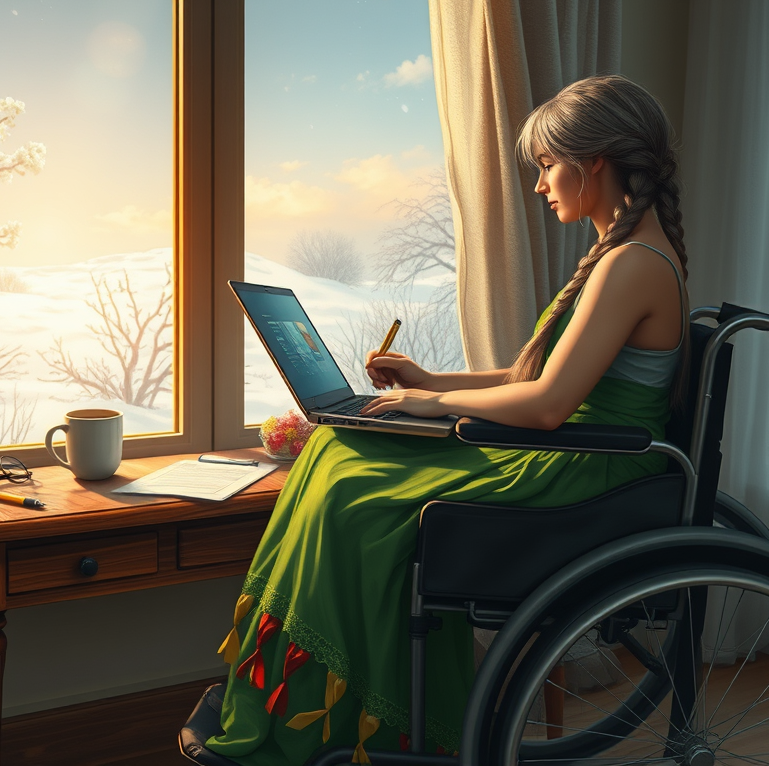

Burnout doesn’t always arrive loudly. For me, it seeped in quietly, masked by the grind of endless medical appointments and the weight of diagnoses after my car accident. Week by week, I pushed through, ignoring my own struggles and focusing on being the rock for everyone else. Helping others had always healed me, but I never stopped to consider the cost of keeping my struggles hidden. Over time, my glass ran empty. When that happens, it becomes impossible to help anyone—not even yourself.
My breaking point came unexpectedly. After years of keeping it together, I cut myself again. I hadn’t done that since I was a teenager. Seeing those fresh marks was a wake-up call. It screamed at me, louder than any emotion or thought: You need help. Now.
I went to the ER hoping someone would step in and help me carry the weight I couldn’t bear alone. I met many of the criteria to be admitted, but they turned me away. They explained that my recent grief over losing my daughter complicated things and despite cutting it would do more harm then good to be admitted. That loss had left deep wounds—ones that came alive whenever I was the patient, yet to be denied help because of mental wounds especially mental health help still confuses me. I left feeling defeated, overwhelmed, and more alone than ever.
To make matters worse, they reached out to my ex. His ableist behaviors resurfaced in full force. Whenever I tried to express a concern, he would dismiss me with statements like, “Did you forget to take your meds again?” or “Are you even going to your therapy appointments?” Once, he even tried to get my therapist’s contact information under the guise of “helping”—but it was clear he wanted to tattle. His words stung, especially when he blamed everything on my diagnoses, turning every issue into my “problem” while taking no responsibility for his role. “It takes two to fight,” he’d say. I didn’t just walk away from his gaslighting, though. I fought it. I argued back, refusing to let his manipulative tactics go unchecked. This wasn’t the man I thought I knew. Facing that truth while trying to keep myself afloat was one of the hardest battles I’ve fought.
Over time, though, I learned about gaslighting and how to recognize it. Understanding what it was didn’t erase the pain, but it gave me clarity—and eventually, power. Now, when I see those same tactics in action, I can snicker in my mind at the pathetic attempts to undermine me. That laughter is a quiet shield, a reminder that I’ve come a long way. Back then, though, it wasn’t so easy. The words cut deep because I didn’t yet have the tools to see them for what they were. That insight, while hard-earned, has made all the difference.
Finding balance began with something simple: smudging again. For those unfamiliar, smudging is a sacred practice—a way of washing away negative emotions while asking for help with the good. Starting that ritual again felt like reconnecting with a part of myself I’d lost. From there, I picked up my paintbrush. Art became a gentle escape, a way to process without words. Soon after, I found myself beading—carefully stabbing a needle through fabric thousands of times to create something beautiful. Beading taught me patience in a way nothing else could. It’s funny when you think about it: needing so much patience to repeatedly stab something in the name of beauty.
Helping others is still a core part of who I am. My calling as a healer feels impossible to resist, and honestly, I wouldn’t want to. But I’ve learned to step back when needed and to limit how many people I help at one time. Being able to care for others starts with being able to care for myself.
When I forget, someone with four paws often reminds me that fun is a need, not a want. While there are many bad chapters in my story, they do not control me. I choose how I act on those experiences. I choose to learn and better myself. I choose to remember the good times, especially in the darkest ones. Those choices give me power and perspective.
Part of finding balance is having at least one person you trust with everything. For autistic people, that can be especially hard to find. Communication styles and sensory sensitivities often create gaps that make trust feel unreachable. Yet, to truly be balanced, that connection is vital. I am lucky enough to call that person my sister. Despite being six years apart in age, we have a bond that started the day she kicked me while I lay on our mother’s tummy reading to her. We can go months without talking and pick back up as if no more time passed than it would take to get a glass of water. I know I can go to her with my memories, even if she doesn’t recall those times—likely because she wasn’t exposed to them. I am grateful for that. She is the only person I truly trust to hold those memories, knowing they won’t go any further. Still, I’ve told her she is free to share them with her fiancé if she feels the need. Partners shouldn’t keep anything from each other. They know who I am, and they are the only ones who know that I use the shield of a pen name to write.
Burnout doesn’t define me, and neither does the pain I’ve endured. They’re chapters in my story, but they’re not the whole book. Today, I’m still carving out balance one small joy at a time. If you’re carrying the kind of weight I’ve described, this is your reminder to find space for joy. Even when it feels impossible, it matters. Fun isn’t a luxury—it’s a lifeline.
 Who am I?
I would love to hear from you!