Hello everyone, welcome or welcome back to my crazy random world where you have no clue what is coming next for a topic. Did you know that your shadow always points directly toward the middle of a rainbow 🌈? Wild, right? Hello everyone, welcome or welcome back to my crazy random world where you have no clue what is coming next for a topic. Did you know that your shadow always points directly toward the middle of a rainbow 🌈? Wild, right? Okay, enough fun facts—let’s dive into what you actually came here for.
So, with all the crazy stuff in our world, I decided I wanted to do a “just because I can” post about what I would do if the world fell apart and what I would take. It didn’t actually take me long to think of what I’d do and bring.
First, all the pet food for my pets—because it’s going to take a bit to get everything set up. I’d also grab tethers and land anchor screws for them so they don’t get lost. Then I’d bring my longbow, along with plenty of bowstrings (thank you for the proper term, Copilot!). I’d add a couple of crossbows, some compound bows, and a few quivers. Netting, a couple of fishing rods, a bunch of fishing lines, lures, and the colorful bait stuff would also make the list. No, I’m not much of a fisher, but I have fished before, so I have something to go off of at least.
A bunch of arrows, knives, and skinning tools would be vital, as well as leatherworking tools. I’d grab my First Nations medicine books and any medicinal supplies I already have. A book on how to smoke meat in a log, along with a few other reference books, would be coming too. Clothing-wise, I’d pack only a few durable pieces suited for the outdoors.
Axes of various types, shovels, and cement bags would all have a place. The cement wouldn’t be for what you think—I’d pour it into a box lined with plastic to create textured, grippy slabs that could be relocated as needed. I’d grab as many nails and screws as I could find. Bedding still puzzles me because claws and mattresses don’t mix, but it’d need to last a year or two just in case. Add blankets and lots of socks to the pile—wet socks are practically an illness waiting to happen. I’d also grab cast iron pans and pots, seeds for planting, and a sturdy tent. That should cover everything, but if I’ve missed something, feel free to let me know!
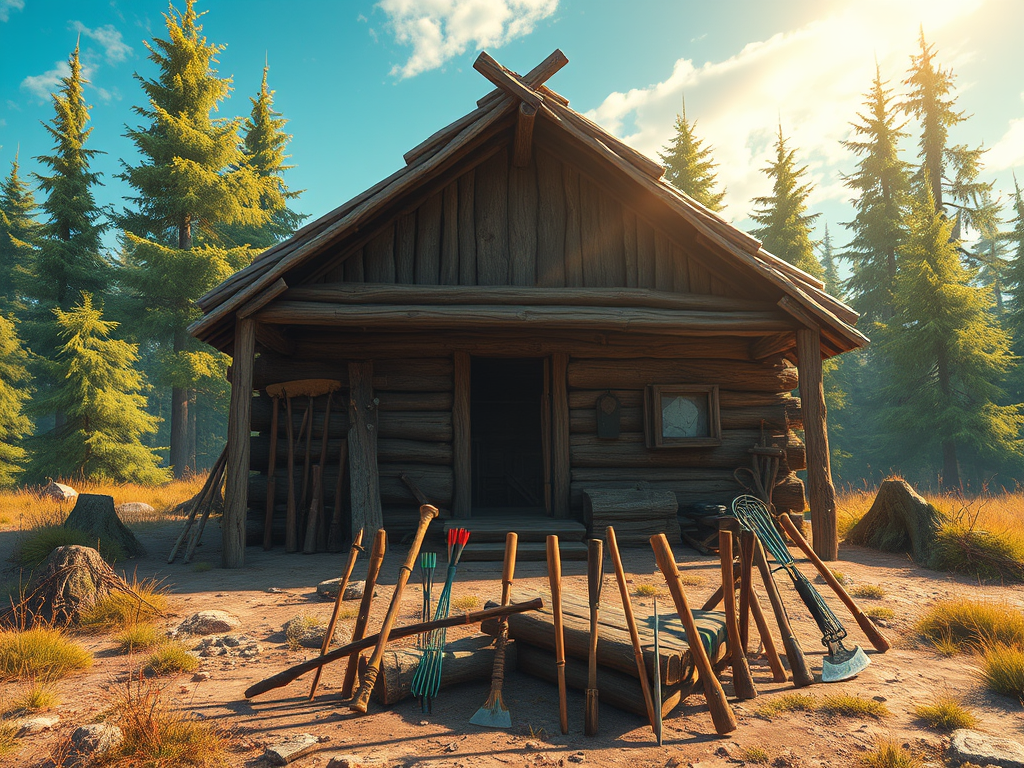
You see, my plan is to build a small one-room cabin with logs and mud, complete with the most basic fireplace you could imagine, that juts outside a bit so the smoke can go ou through a hole—just enough to provide heat inside during the winter. Each log would be carefully notched to fit snugly together, creating a sturdy frame that won’t give under harsh conditions. Mud would be packed into every gap between the logs, sealing the structure against drafts and ensuring it’s as weatherproof as possible. The cabin wouldn’t be anything fancy, but it’d be solid and functional, designed purely for survival.
Stretching racks for hides would come next, built from rough-hewn wood and anchored securely into the ground. They’d allow me to treat animal hides thoroughly, preparing them for clothing, coverings, and other uses. Each rack would be positioned strategically around the cabin to maximize space without cluttering the area.
The garden would take shape as soon as possible, depending on the season. Hardy vegetables—like root crops and leafy greens—would fill shallow, hand-dug beds lined with natural barriers to keep out curious wildlife. This area would be my food supply’s backbone, needing constant attention to ensure successful harvests.
The firepit outside would be a shallow, circular hole ringed with large stones. Its location would be chosen carefully to avoid wind exposure while staying far enough from the cabin to minimize smoke or accidental damage. The bathroom, meanwhile, would be placed downstream, far from both the cabin and the garden, to respect hygiene and prevent contamination. It would consist of a dug hole covered with a plank balanced on two logs—simple but effective for keeping things manageable. Every couple of days, I’d shift the setup to a fresh spot to ensure cleanliness without disrupting the camp.
With these elements established—cabin, fireplace, stretching racks, garden, firepit, and bathroom—I’d have a functioning base camp that meets my most immediate survival needs.
Once the base is ready, I’d dive headfirst into hunting game. Hunting wouldn’t just mean food; it’d be the foundation for so many other essentials. Each animal would provide meat that could be dried, smoked, or preserved for the long term. Speaking of preservation, this is where the log smoker would come into play. Following instructions from one of my reference books, I’d hollow out a large log, carve airways to allow proper circulation, and build an adjoining firebox for controlled smoking based on the designs for an all natural log smoker. This smoker would be central to my plans for processing meat, adding to its shelf life while improving its flavor.
As I worked through the process of drying and smoking meat, I’d also begin preparing the hides. Buckskin shirts and pants would be the first clothing items on my list, with moccasins in a few styles coming next for navigating the terrain. Fishing would add variety to my meals while keeping the diet balanced.
Using my book as a guide, I’d make sure every part of the animal served a purpose. Tendons would transform into tough, sinewy thread. Hooves could be boiled down into glue, while fats would melt into tallow for candles and soap. Hides would serve as clothing, bedding and footwear. Shoulder blades could become versatile tools, and bones could be shaped into arrowheads, scrapers, or needles. Even the stomach could be repurposed as a water container. Nothing would go to waste in this cycle of resourcefulness.
Stretching hides would be an ongoing task, with some kept furry for warmth and others scraped clean. Larger hides, once enough clothing and accessories were made, would be stitched together into a teepee, of course these would all be scrapped clean on both sides. This versatile shelter would keep me cool in summer, warm in winter, and allow for a fire in the center—an essential upgrade as I became more established. Its top would be replaced every spring to make moccasins because that hide is now gonna handle the wet a lot easier.
As this process unfolded, I’d juggle the demands of maintaining a garden, checking snares daily, and tending fires around the clock. Life would settle into a rhythm, where every action supported the next step toward sustainable living.
Winter furs would eventually turn into my bed and blankets. As I improved my skills, I’d start crafting usable arrows to maintain my supply. First, I’d gather straight branches or shoots from trees like willow or birch, which are ideal for arrow shafts. After smoothing and shaping the wood, I’d attach arrowheads—crafted from bones or sharpened stones—using sinew as binding material. Feathers, likely gathered from nearby birds, would be split and tied to the back of each arrow to improve flight stability. It’d be a time-intensive process but deeply rewarding as my accuracy improved.
Medicines would come from local plants, many of which I’d identify using my reference books. Yarrow, for example, would be my go-to for wound treatment, as it helps stop bleeding and prevent infections. Juniper berries could serve as a diuretic, aiding kidney health, while plants like wild mint could soothe upset stomachs. For day-to-day hygiene, I’d rely on plants like soapwort, which creates a gentle lather when mixed with water, making it a natural soap alternative. These plants, along with others yet to be identified, would form the backbone of a functional and natural medicine cabinet, keeping me healthy and clean throughout my survival journey.
Clearing the area around my home would provide plenty of firewood. Trees left standing would act as windbreaks, offering natural protection. If other hunters were around, I’d look to team up for larger game hunts. Mobility challenges might crop up, but a horse or a pulley-and-rope system could help transport heavy items.
Working solo would be tough, but this plan could easily expand to support others. Everything I’d bring (except for screws) could be replaced naturally, and the approach is sustainable.
Eventually, I’d swap the tent for a hide one and establish a fully moveable, sustainable system for hunting further out. Would it be challenging? Of course. But why reinvent the wheel when we have something that has already been well proven to work.
Do I think this will actually happen? No. But it’s fun to imagine and plan—it’s calming and grounding for me. And with food prices soaring, who knows? I might need to do this just to eat. Yeesh.
If you had to survive off the land, what would your plan look like? I’d love to hear your thoughts! For kicks and giggles of course.
 Who am I?
I would love to hear from you!