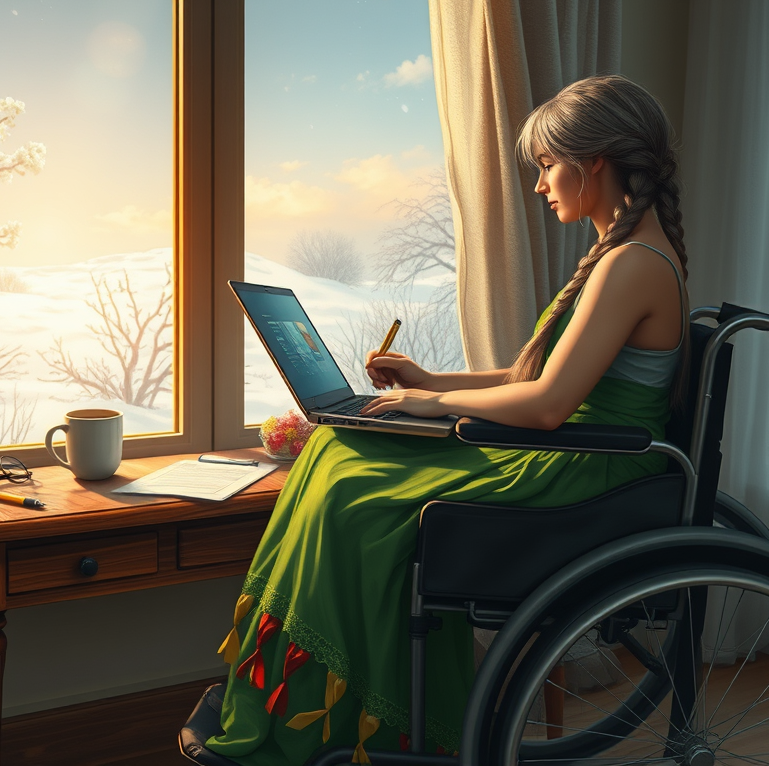

Mental health struggles are rarely loud. They rarely announce themselves in ways people recognize or respond to with urgency.
Instead, they settle into the quiet spaces, into unsaid words, into the hesitation before answering How are you?.
They exist in the practiced smile, the controlled tone, the I’m fine spoken so effortlessly that even I start to believe it.
They exist in moments people don’t notice—when someone pauses before asking for help, debating whether the effort is even worth it. When they choose silence because speaking up has never gotten them anywhere before. When they sit with thoughts too heavy to carry but too familiar to let go.
There are things people don’t say out loud—not because they don’t want to, but because they’ve learned no one listens.
There are experiences so common, so deeply ingrained, that they become invisible.
Loneliness isn’t just about being alone.
Self-doubt isn’t just about confidence.
Exhaustion isn’t just about sleep.
And touch hunger isn’t just about missing affection.
These things sit in the background, unspoken, unnoticed, quietly eating away at someone until they begin to wonder—Am I even worth being heard?.
This is what it feels like to exist in that silence.
There’s a way the world looks at me that I don’t think I’ll ever get used to.
Like I’m something to be endured.
Like I’m a project—half-finished, patched together, fragile in a way that’s annoying rather than alarming. I see it in the way people hesitate before responding, in the flicker of impatience, in the tight-lipped nod that says right, this again.
I see it in the way people keep their distance.
Family, friends, strangers—it doesn’t matter. There is always a point where people pull back, where patience wears thin, where I go from being someone to being something to tolerate.
Some days, it’s not frustration—it’s something duller, heavier. Resignation. Some days, it’s easier to play the part, to nod, to move on, to pretend I don’t notice the way people shift when I speak, like they’re bracing for impact.
Some days, I don’t have the energy to explain. Some days, I don’t have the energy to believe them when they say they care.
And some days, I wonder if they’re right—if I really am a burden.
If I’m just one more inconvenience, one more problem that everyone tolerates rather than embraces. Maybe that’s why even my family keeps their distance, why people hesitate when I reach out, why conversations end faster than they begin. Maybe I am too much.
Maybe I should just stay quiet.
I’ve learned to avoid the places where I’m not wanted. To keep my voice soft, my presence smaller. To stop seeking medical care—not because I don’t need it, but because I’d rather live with the pain than relive the dismissal, the cold stares, the moments that confirm the fear I already carry: they won’t listen. They never do.
It isn’t just bias—it’s trauma.
The kind that lingers in my body, in my breath, in the way I tense before walking into any medical office, waiting for the doubt, the disbelief, the impatience.
Even when my body screams for help. Even when my breath comes short, tight, wrong. The fear of the bias is heavier than the fear of whatever is happening inside me—because I know what comes next.
The side-eye. The questioning. The hesitation before they even touch me. The way they say it’s probably nothing before even looking.
The way they talk over me, already deciding the outcome before I’ve finished explaining.
The way they dismiss my pain as something exaggerated, something imagined, something that belongs more to a diagnosis than to me.
The way they forget I am a person first.
Some people stay away out of discomfort. Others stay away out of exhaustion.
I know the excuses before they’re spoken. I didn’t want to say the wrong thing. I figured you needed space. I thought you’d reach out if you wanted help.
But what they never consider is that silence is rarely a choice—it’s survival.
Some days, I stop reaching out. Some days, I stop speaking at all.
Some days, I don’t even bother getting up.
Because it’s just the same as yesterday. Just lonelier.
Because I know how the day will go, how the hours will stretch on, how nothing will change except the growing weight of being unwanted.
Touch hunger is worse than I ever admit. It’s not just missing physical contact—it’s feeling the absence of it like an ache, like something the body knows it needs but no longer expects. It’s the restless craving for a simple hand on the shoulder, the grounding weight of an embrace, the proof of existence that touch provides.
And after a while, you stop expecting it.
After a while, you stop believing you deserve it.
After a while, the thought of being held feels foreign—like something from a different lifetime.
Some days, I wonder if I could change enough to fix it.
Would more grey in my hair make people take me seriously? Or less?
Would dressing differently help? Speaking differently? Smiling more? Smiling less?
Would a different face, a different body, a different life be enough to make me worth something?
Maybe I’m just not pretty enough.
Maybe I talk too much. Or not enough. Maybe my voice is the problem. Maybe my silence is.
Maybe if I was easier to understand, easier to like, easier to handle, I wouldn’t feel like this. Maybe I wouldn’t be here, spiraling through questions I’ll never have answers to.
Maybe I wouldn’t overthink every single interaction, wondering if I sounded too cold, too eager, too distant, too desperate.
Maybe I wouldn’t replay conversations in my head, dissecting every pause, every sigh, every shift in expression, trying to decode what people really meant.
Maybe I wouldn’t shrink myself down into something quieter, something easier, something that doesn’t make people uncomfortable.
And some days, when the exhaustion settles deep—when the weight of it all becomes something I can’t shake, something I can’t lift—I don’t think about ending things. I just think about how easy it would be if life sped up, if time swallowed me whole, if I simply… didn’t wake up.
Not in an act of harm. Not in anger. Just as if it was time.
As if maybe the universe would finally tap me on the shoulder and say that’s enough now, you can go.
As if maybe I would just quietly fade, unnoticed, unmissed.
Maybe that’s why I’m stuck in the silence of the things I never say out loud.
And maybe I’m not the only one.
Maybe there are countless others who feel the same—who carry words that never get spoken, who live in quiet struggles that no one sees, who have learned that survival often means silence.
Maybe you’ve felt it too.
And if you have—if this weight is familiar, if these thoughts are ones you’ve swallowed down before—just know, you’re not imagining it. You’re not overreacting. You’re not being difficult.
This feeling is real.
And maybe, someday, the world will learn how to listen.
Until then—until that day comes—know this: Your existence is not the burden. The failure to understand it is.
And that is not yours to carry.
 Who am I?
I would love to hear from you!