
Hey there, new and returning readers!
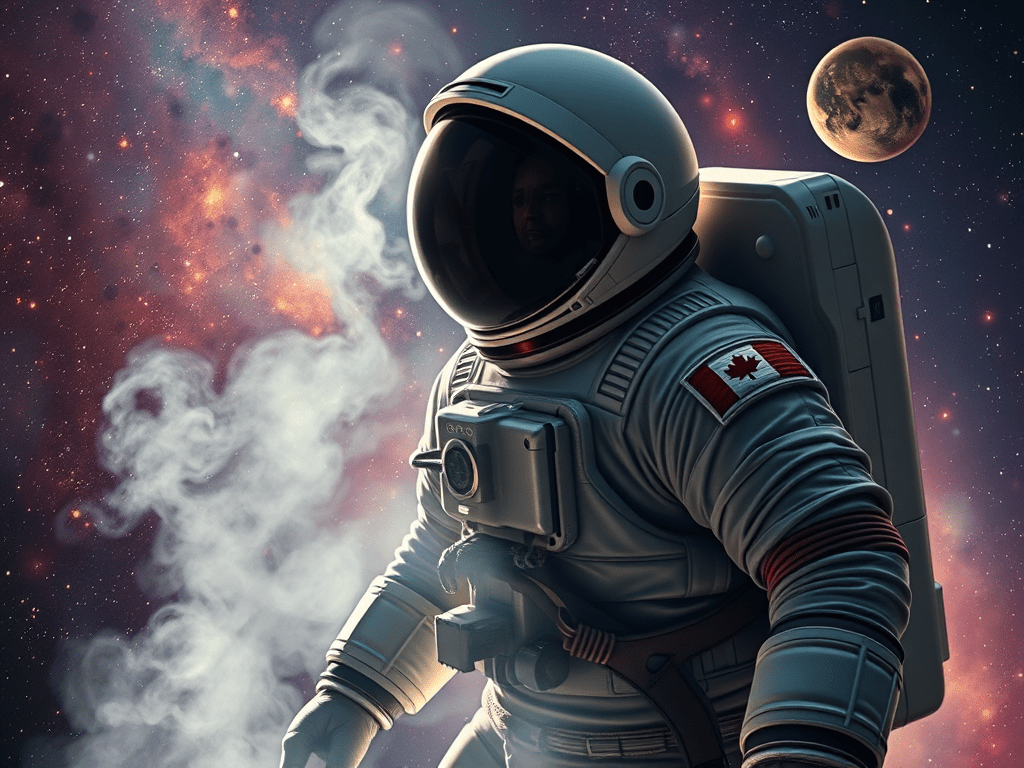
Did you know that space smells like burnt steak? Astronauts who have completed spacewalks report that their suits carry back a scent described as metallic, smoky, and even slightly meaty—likely due to the chemical reactions in the vacuum of space. Weird, right?
Now, onto something far closer to Earth—but just as complex.
If you’ve ever had someone randomly pat your shoulder, ruffle your hair, or give you an unexpectedly long hug (why do some people hold on just a little too long?), you might not think much about the importance of human touch. You’re just existing, moving through life, occasionally being poked by well-meaning family members or overly affectionate friends.
But what happens when touch isn’t there? When it disappears—not for hours, not for days, but weeks, months, maybe longer?
That’s where touch hunger comes in. It’s a very real, very human craving for physical connection—not in some romantic, candlelit dinner way, but in a fundamental, biological need kind of way. And here’s the kicker: mental health and touch hunger are deeply linked.
Whether you’ve gone too long without human contact or you’re just curious about how all of this ties together, we’re diving in.
Because the body notices when touch disappears, even if we pretend not to.
Touch is an unspoken language, a quiet force that holds the power to ground, to soothe, to stabilize. It is given freely—handshakes, hugs, a steadying grip on the shoulder—but when absent, when withheld or simply lacking, it becomes something else entirely. It becomes hunger.
I know touch hunger like an echo in the chest, a presence marked by absence. It is not about romantic longing, nor some fleeting desire for intimacy—it is the very real, physiological craving for human connection through physical contact. A hand to hold. A warmth at the side. Something concrete in a world often too distant, too removed.
There are stretches of time where I go weeks without human touch. At first, it barely registers—just another facet of everyday life, something ignored simply because it is easier to not think about. But then, in moments of silence, in solitude that stretches too long, I feel it. The way my skin seems too cold, the way my breath feels too heavy in my ribs. The way my body, wired for comfort in closeness, has learned instead to function without it. Not by choice. Simply by circumstance. And for many, that quiet deficiency runs deep.
The mental health impact of touch deprivation is both subtle and profound. Studies have shown that human contact triggers the release of oxytocin, the so-called “bonding hormone,” and helps regulate cortisol, the hormone responsible for stress responses. Without it, stress lingers longer, anxiety becomes harder to regulate, and emotional exhaustion sets in without relief.
It is ironic how readily touch is given in passing—a handshake, a pat on the back, a squeeze of reassurance—and yet, for many of us, it remains just out of reach, an element of connection that simply does not exist in day-to-day life. And in its absence, the mind and body adjust. But they do not thrive.
For some, prolonged lack of touch deepens existing mental health struggles—heightening feelings of isolation, exacerbating symptoms of depression, and reinforcing a sense of disconnection from others. It is not just a matter of loneliness. It is a physiological shift. The body knows what it is missing even when the mind tries to brush it aside.
And yet, when present, touch is transformative. It strengthens. It builds pathways between people, forging trust, easing pain, lowering the walls that mental health so often erects in solitude. A hug can regulate heart rate. A reassuring pat on the back can lower stress. The body knows what the mind sometimes forgets—it was made for contact. For connection.
But what happens when touch becomes foreign? When weeks stretch into months, into years, and human contact is no longer a given? The absence shifts from longing to adaptation. The hunger becomes manageable, becomes a quiet ache pushed aside. And that, perhaps, is the saddest part—the realization that something so fundamental can be unlearned, not because it was unwanted, but because it was simply never there to begin with.
This is where mental health and touch deprivation intertwine most deeply. The lack of touch does not merely impact emotion—it rewires perception. It shapes how a person sees themselves in relation to others, how they process closeness, how they navigate trust. It creates barriers that were never meant to exist but have formed out of necessity.
For those who feel it—the weight of weeks without touch, the way absence settles in the bones—I see you. And for those who have the ability to offer connection, to remind others that touch is healing, do not underestimate the power of a simple gesture.
Because sometimes, the smallest act—a hand reaching out, a presence beside you, a reminder that you are not alone—is the thing that pulls someone back from the quiet depths of solitude.
Touch hunger is real, and its absence affects more than just physical comfort—it shapes mental health, self-perception, and even how we connect with others. Some people feel it deeply, while others barely notice until they reflect on it.
So, tell me—how often do you go without human touch? Have you noticed its impact, or does it not really cross your mind? Drop your thoughts in the comments. Let’s talk about it.
And hey—if this post hit home, share it. Because chances are, someone else out there needs to see this too.
2 responses to “Touch Deprivation & Mental Health: Why It Matters”
-
-
Thank you very much Sven Anger,
I know about it feels all to much. It is easier to mitigate when you know the why of something. That ache that need screaming within our hearts in the darkness filled with darker rabbit holes.
Also when we don’t talk about things we don’t like, then we may leave others in that darkness and they don’t know why.
I write because if my posts save one person, makes them feel less alone then I am more then happy for every minute spent writing. That loneliness is what drives us to self harm and further on that path. Knowledge is power, power is confidence, confidence is self esteem and that gets you out and about or asking for help. Plus writing helps me stay out of dark places.
You and I know the power of words or we wouldn’t bother writing lol
I am very pleased it hit the way it was meant to. Keeps it in a person’s mind.
Siearra ❄
-


 Who am I?
I would love to hear from you!