Fear doesn’t care about logic. It doesn’t follow reason, it doesn’t adhere to survival instincts, and sometimes, it decides that life’s most harmless things are worth absolute terror. Heights, deep water, total darkness—those make sense. They involve real danger. No one is willingly leaning off a cliff while whispering, “Gravity, do your worst.” But then there are the phobias that defy all logic. The ones that turn innocent objects and everyday occurrences into full-scale threats.
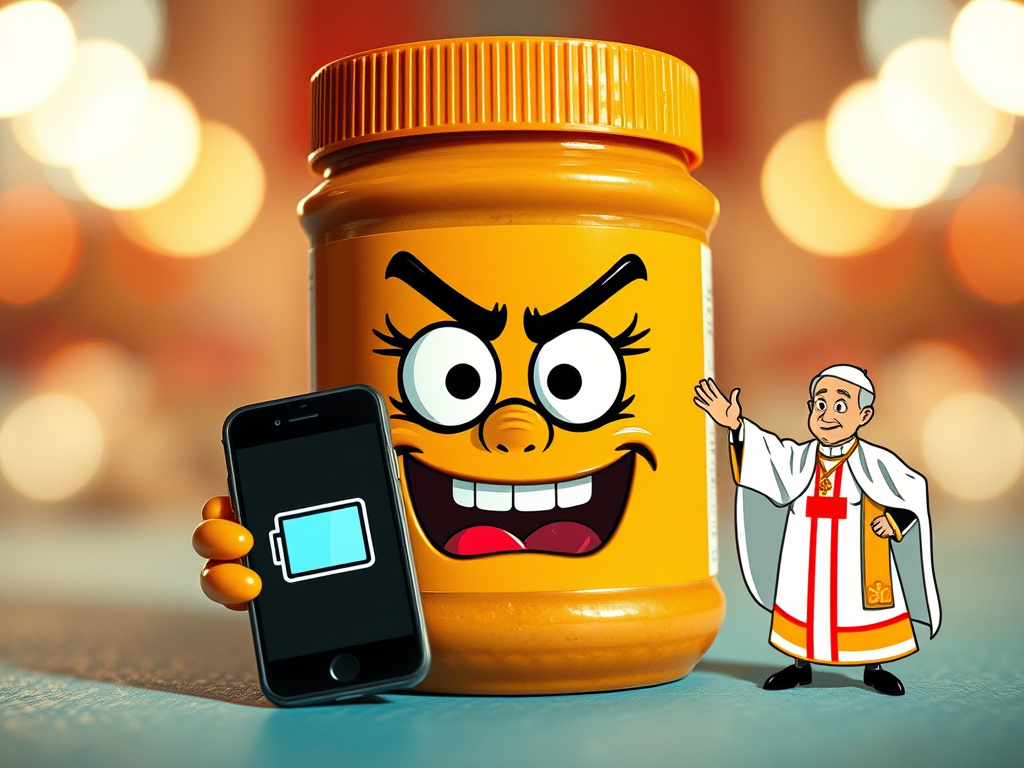
Take peanut butter. Not peanut butter itself, but the way it sticks to the roof of the mouth. Arachibutyrophobia turns an ordinary snack into a nightmare scenario. It’s not about choking. It’s not about allergies. It’s about that moment when peanut butter refuses to leave, clinging to the roof of the mouth like it owns the place. It lingers, thick and stubborn, transforming a simple bite into an existential crisis. People blame sensory overload, a bad childhood experience, or an exaggerated gag reflex. Either way, peanut butter has unknowingly started a war, and some people have officially declared it their enemy.
Then there’s technology. It was supposed to make life easier, but instead, it created nomophobia, the fear of being without a phone. There is something about watching the battery drop below ten percent that feels like an immediate threat. The red battery icon appears, and suddenly, survival instincts kick in. The charger is now the most important object on earth. Studies show phone addiction mimics withdrawal symptoms, which makes sense when losing access to a device suddenly feels like losing a lifeline.
Fear of the Pope is real. Not fear of religion, not fear of divine punishment—just fear of the Pope as an individual. Papaphobia turns one man in elaborate robes into an overwhelming force of anxiety. Some say strict religious upbringing plays a role, others claim it’s something deeper, an unease around authority figures with immense power. There’s no solid answer, just the fact that some people would rather avoid any potential papal interactions entirely.
Some fears declare war on color itself. Xanthophobia makes yellow something to avoid at all costs. Sunflowers, taxis, bananas—gone. Brightness becomes overwhelming, turning objects meant to symbolize warmth and optimism into threats instead. Some theories blame sensory overload, others suggest a negative childhood association embedded yellow as something distressing. Whatever the cause, mustard is officially out of the question.
Then there’s fear of facial features. Pogonophobia makes beards unbearable, as if facial hair itself carries some kind of inherent menace. Some link it to hygiene concerns, others say beards hold too many historical ties to rebellion and authority, which makes them immediately suspect. And then there’s geniophobia—fear of chins. Not faces, just chins. The logistics of social interaction with this fear are impossible to comprehend. What happens when someone walks up and starts a conversation? Is avoiding eye contact a full-time strategy? Are turtlenecks the only acceptable fashion choice? The world offers no answers, just the fact that this fear exists.
Some fears feel deliberately designed to complicate life in ways that defy explanation. Spectrophobia makes mirrors unbearable, turning a simple reflection into something deeply unsettling. It isn’t just about the idea of seeing oneself—it’s about the lingering doubt that something is wrong with the reflection itself. Maybe it moves when it shouldn’t. Maybe it feels off, distorted in a way no one else would notice. Whatever the reason, this fear makes every glance at a mirror feel like stepping into a psychological horror scene.
Then there’s chorophobia, fear of dancing. Not the fear of being bad at dancing. The fear of movement itself, as if rhythm is some kind of forbidden force that must never be engaged with. Music shifts from something enjoyable to something oppressive, a pressure forcing movement that suddenly feels impossible. Avoiding dance floors becomes an art form, perfected over years of ensuring movement never becomes an expectation.
Some fears take objects designed for joy and turn them into deeply unnecessary threats. Globophobia makes balloons an outright menace. They float. They drift. They exist in a constant state of waiting, and eventually, they pop. That tension, the knowledge that at some unpredictable moment a balloon will explode into absolute chaos, makes them unbearable. Birthday parties suddenly feel like war zones, every balloon a tiny, highly unstable landmine.
Siderodromophobia targets trains, a form of transportation meant to make life easier. It isn’t fear of crashing. It isn’t fear of tunnels or tracks. It’s fear of trains as a concept. Something about the sheer force of an industrial machine built for travel, the way it moves, the endless sound of it grinding forward, triggers deep discomfort. Some say sensory overload plays a role, others say the scale and power of trains make them inherently unsettling. Either way, train travel is permanently out of the question.
And then there’s ablutophobia, fear of bathing. Not fear of water. Not fear of drowning. Fear of the act of getting clean, of stepping into an environment that demands washing. Hygiene itself becomes the enemy, every attempt to shower or soak triggering overwhelming distress. Sensory sensitivity might be a factor, or it could be tied to deeper psychological trauma, but either way, regular bathing becomes a nightmare.
None of these make sense. Some phobias have clear origins, shaped by specific life experiences. Others seem to exist purely for inconvenience, forcing the brain into irrational avoidance. No one is born afraid of balloons or beards, yet somehow, these fears develop. Fear isn’t rational, it isn’t predictable, and sometimes, it’s outright ridiculous. But honestly, the phobias people dismiss today might feel justified tomorrow. The world is unpredictable, after all.
What’s the strangest fear you’ve ever heard of? Or better yet, what’s yours?
 Who am I?
I would love to hear from you!