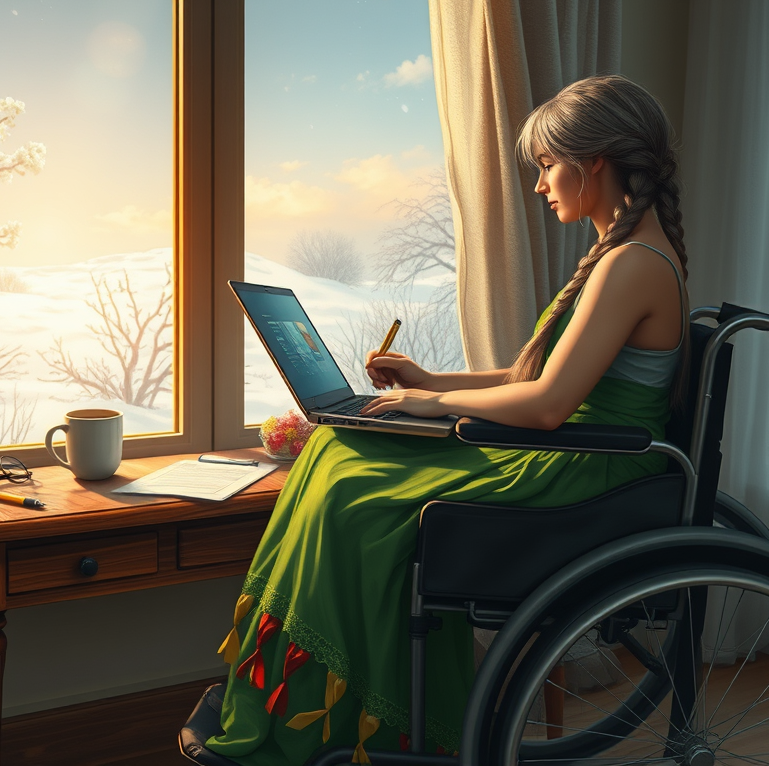

So, here’s the thing: living with chronic pain and neurodivergence that has sensory aspects is like signing up for a rollercoaster where the seatbelt is a piece of spaghetti, the operator is a raccoon, and every hill feels like a surprise ambush of chaos. You’d think that pain would simply be pain—a straightforward ton of bricks—but oh no, my delightful AuDHD brain decided to spice things up. What happens instead is akin to an elephant landing on me, not gracefully, mind you, but in a manner that suggests it just fell out of a tree. Everything becomes magnified—every sensation, every stress, every flicker of light in the corner of my eye feels like it’s auditioning for a starring role in my misery.
This sensory overload is a special kind of torment. Imagine you’re already dealing with pain, the kind that makes you want to crawl under a blanket and never emerge, and then your brain decides, “Hey, let’s amplify this, shall we?” It’s as if my neural circuits start a rave where the only music is feedback loops of discomfort. It’s not just the pain that hurts; it’s the way everything else gets louder, sharper, harder to ignore. The sound of a tap dripping turns into Niagara Falls. The texture of a blanket, which was once comforting, suddenly feels like sandpaper. And the smell of cooking food? Forget it; it might as well be a full assault on my senses. Oh, and let’s not forget the electricity—yes, I mean the buzzing hum of it bleeding through the walls or the faint, almost imperceptible crackle from powerlines if I get too close. It’s the kind of sound that sneaks into my awareness and refuses to leave, like an uninvited guest at the sensory overload party.
When I hit overload, I spiral fast and hard. I’m not talking about a graceful descent into introspection; I mean a chaotic tumble that leaves me clinging to whatever semblance of stability I can find. And let me tell you, that stability is often found in the people I trust. These aren’t just casual acquaintances. No, these are the people who accept my quirks, my clinginess, my moments of hyperfixation where I text them at odd hours to share random thoughts about obscure topics (did you know octopuses have three hearts? Because I do, and someone’s going to hear about it). These people know that when I reach out to them, it’s not just me saying hi—it’s me saying, “You are my anchor in this storm, and I trust you more than I trust my own ability to cope right now.”
Trust is a peculiar beast for me. It’s not freely given, and frankly, it’s often a bit sticky. When I cling, I cling hard, not because I’m needy but because it’s my way of saying, “You bring me comfort when the world feels hostile and overwhelming.” I stim through interaction; I hyperfixate on these bonds because they feel safe in a way that nothing else does. I’ll admit, sometimes I worry that I’m too much—that my intensity will scare people off. But here’s the thing: I appreciate those who can gently tell me, “Hey, maybe dial it down a notch,” because subtlety is not my strong suit. Reading between the lines? Yeah, that’s a skill I missed out on, like a party invitation lost in the mail. So, if you don’t tell me outright, I probably won’t catch it.
There’s also something hilariously straightforward about the way I communicate. Hidden agendas? Nope. Secret meanings? Not a chance. If I say something, it’s because I mean it, full stop. Well, except for one tiny exception: when I’m attracted to someone or talking about a topic that makes me shy. Then, I might get a bit evasive—not lying, of course, but definitely dancing around the subject. It’s like trying to slide past a sleeping dragon without waking it. But if you ask me directly, I’ll answer, probably while blushing so hard you could spot me from space. Blushing is kind of my signature move, actually. I could probably power a small country with the heat radiating off my cheeks in those moments.
At the core of it all, though, is vulnerability. Chronic pain strips away layers of pretense and leaves me raw. Combine that with a sensory system that feels like it’s on steroids and a brain wired for neurodivergence, and you get someone who is simultaneously tough as nails and fragile as glass. It’s a paradox, but it’s also my reality. Pain doesn’t just hurt—it crashes into my sensory sensitivities and wreaks havoc. Overload doesn’t just make me uncomfortable—it makes me withdraw, retreating into the safest spaces I can find, be it the comfort of a trusted friend or the quiet corner of my mind where I can breathe.
But here’s the kicker: despite all the chaos, despite the days when it feels like the world is conspiring against me, I’ve learned to find humour in it. Maybe it’s a coping mechanism; maybe it’s just who I am. When life hands me a metaphorical elephant, I’ll joke about how it’d better not expect peanuts because I’m fresh out. When my sensory system decides to stage a mutiny, I’ll laugh (after the meltdown, of course) at the absurdity of it all. Because if I don’t laugh, I’ll cry, and honestly, I’ve found that giggling at my own blushing, fumbling, overstimulated mess of a self is infinitely more satisfying.
So, here I am, walking this chaotic, humorous, occasionally overwhelming path with chronic pain and AuDHD. It’s not easy, and it’s certainly not dull. But it’s mine, and I’m learning to embrace the quirks, the spirals, the blushing, and yes, even the buzz of electricity in the walls. Oh, and I mean both physical and emotional pain. I try to face life with a laugh instead of crying. I do not always win in that regard; however it makes me feel better to do the best I can to make those around me happy. This can lead to be overly concerned about being to much, talking to much, oversharing… all those delightful traits known to come with AuDHD. I am me and I am learning to accept me, pain, laughs and everything in-between. I am always learning who I am because it is always changing. Especially as I learn about things to share with everyone here because I get those “well that explains that” moments when I do.
Those in my life, which have me overtalking, over sharing, being too talkative, may not know how that is good with me. I can’t expect them to understand my approach to things without letting them know. They can not read minds any better than I can. Even if the odd person can see right through my masking to me. There are a few new people who are in this category that I have recently met. They fill me with joy, laughter and oh boy things being talked about, I feel like I have known a couple of them for a very long time despite only recently meeting, those who can get through my walls that fast with my past being hell for all I can recall of my life is impressive. Those people mean the world to me, just as those who take a bit more to get through those walls.
Those that are close to me are my pack. Humans are not meant to be alone no matter if they know pain to intimately or not. Life is a journey and you need the support of those who care, even if that support includes kicking your rear to help you reach goals that are important to you because we all know I would do the same for those I care about. Chronic pain does not define who I am, it is just part of who I am that needs a bit more understanding when things get to be to much, just as understanding that my AuDHD can be an interesting companion when interacting filled with confidence and lack of confidence. In other words contradictory things are my world. After all I am chaos.
When I hurt I can be overly sensitive, overly clingy and needy. Yet that means something different for me in some aspects then for others. I try and hide pain behind laughs and if I can’t hide it I try and gloss it over because I don’t want to be that person who is always negative. This has lead to issues, I can’t deny that. The lack of self confidence and self esteem may have started with my very own mother yet life continues to make those aspects hard to gain especially with how society looks at those who are to different no matter the cause, pain, thinking different, needing mobility devices etc… it doesn’t matter. Society is cruel so those who become my pack are exactly that, the people I lean on and will be there through anything life can throw at you. For I know how bad things can be, hard to get worse then losing a child yet that is my pain and life experiences and you may have something that hits you just as hard in your life. I am there, always will be. I am even there for those who are on the outside of my pack looking in.
What things have you learned you do that others might not take the same way as you?
 Who am I?
I would love to hear from you!