
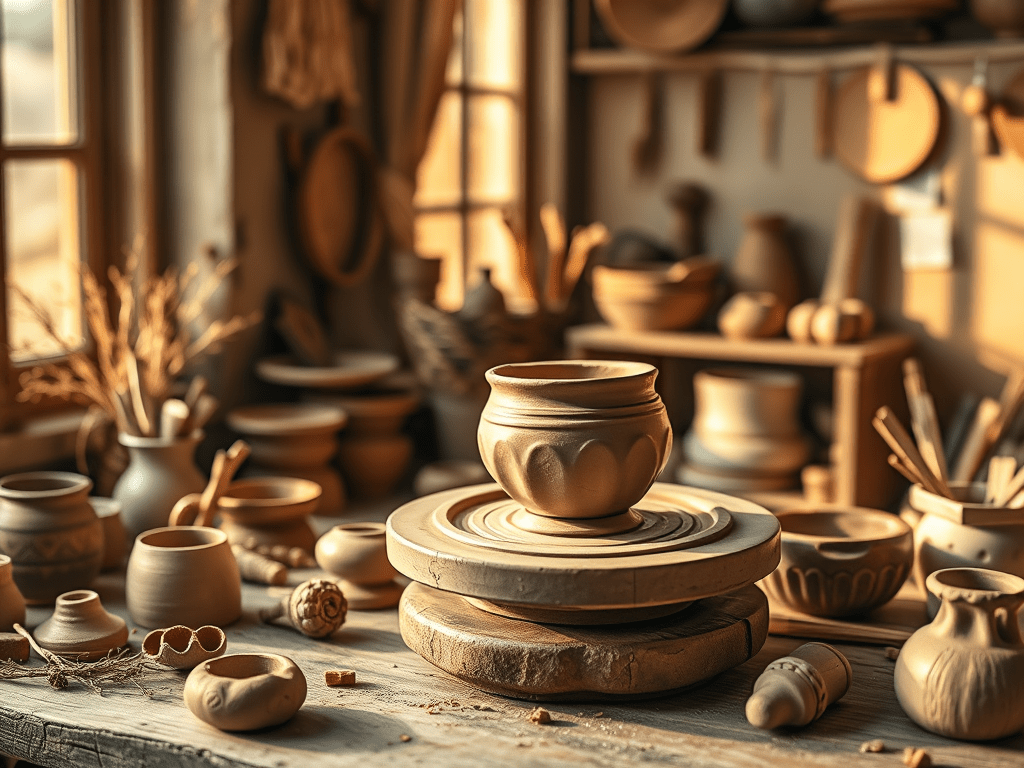
So there I was, scrolling through the digital black hole of social media when I stumbled upon a post about pottery, and let me tell you, I wasn’t prepared for where it would lead me. It started innocently enough—a calm evening, a warm blanket, and the idea that maybe, just maybe, I’d get to bed at a reasonable hour for once. Ha! The universe had other plans. One video turned into ten, and before I knew it, the clock was threatening me with the kind of lateness that should’ve inspired regret but instead whispered, *keep going*.
This guy—this pottery genius—was doing all sorts of witchcraft with clay. One moment he was heating pots and brushing horsehair onto their surfaces, the smoke leaving these ethereal, dancing patterns as though the pottery had captured the very breath of the world. The next, he wrapped pots in clay, shoved them into a barrel with paper, set it all aflame, and out came what can only be described as art born of chaos. It got me thinking—or maybe obsessing—could I do pottery without a kiln? Could I skip the expense of a massive ceramic furnace or avoid explaining to my neighbors why smoke was billowing out of my backyard like I was reason to call the fire department?
Now, let me be clear: I don’t need another hobby. At all. My brain, delightfully wired with AuDHD chaos, loves collecting interests like some people collect stamps. The list is long and unwieldy—painting, crochet, gardening and with leca, baking, sewing, digital art, writing, bead work, leather work, drawing, wood working and whatever shiny new activity TikTok decides to tempt me with. Though I do usually pick them up pretty fast… oh I almost forgot cross stitch. Adding pottery feels like inviting a Tasmanian devil to an already crowded dance floor with road runner playing around everyone to dodge Taz. But here we are. The seed of an idea had been planted, and now it demanded answers. How does one make pottery without a kiln? Is it even possible? Spoiler: It is. And it involves a delightful mix of experimentation, fire, and a willingness to embrace imperfections.
Let’s start with the basics. Clay. It turns out there are a couple of options here. You can buy air-dry clay, which is great if you’re just dabbling, or you can go full rogue and dig up wild clay. That’s right, you can march into your backyard or the nearest patch of nature with a trowel and some determination and scoop up some of Mother Earth’s raw material. Of course, this involves a bit of extra work—sieving, drying, and rehydrating to get it to the right consistency. It’s a process that’s both messy and magical, and honestly, I kind of love the idea of turning literal dirt into a creation that holds tea or flowers or my dreams of functional artistry.
With clay in hand, the next question became how to shape it. You can go old-school and just use your hands, pinch it into bowls, cups, or whatever form your heart desires. Coil building is also an option—rolling out long snake-like pieces of clay and stacking them to create pots. It’s like adult Play-Doh, but with more existential weight because, hey, now you’re making *art*. For those more ambitious, you can even rig up a DIY pottery wheel with a lazy Susan, a drill, or—you won’t believe this—a fidget spinner. Yes, a fidget spinner. Chaos, meet ingenuity.
The real challenge comes with the next step—drying and hardening the clay. Normally, this is where a kiln would come into play, taking your delicate creation and firing it to perfection at temperatures that could roast a pizza in seconds. But we’re here to defy convention and embrace backyard pottery anarchy. Air drying is the first step, letting your clay slowly lose its moisture until it’s no longer soft and sticky. Patience is key here, and patience is not my strong suit, but I soldiered on. Then comes the firing, or in our case, the *non-kiln firing*.
Without a kiln, you’re left with some delightfully primal options. One method is pit firing, which is as wonderfully chaotic as it sounds. You dig a hole—yes, an actual hole—line it with combustible materials like wood, paper, or sawdust, and place your pottery inside. Then you light it up and hope for the best. It’s not an exact science, but that’s part of the charm. The results are unpredictable, with flames and smoke adding unique textures and colors to the finished piece. It’s like collaborating with fire itself, letting it decide the final outcome of your art.
Another option is barrel firing, which is similar but involves a metal barrel instead of a hole in the ground. I’ll admit, the thought of telling my neighbors, “Don’t mind the fiery barrel in my backyard, it’s just art,” makes me cackle softly to myself. There’s also the added benefit that you can throw in all sorts of organic materials—leaves, salt, copper wire—and watch as they leave their mysterious imprints on the clay like whispers from a forgotten alchemy.
Now, the techniques that hooked my attention in those late-night videos are on another level. The horsehair method, for instance, is pure magic. You heat the pottery until it’s just the right temperature, then gently touch strands of horsehair to the surface. The hair burns away, leaving behind hauntingly beautiful black trails, like smoke frozen in time. I don’t own a horse (yet), but I hear you can substitute other materials—feathers, human hair, or even dry grass. Each one yields its own patterns, and it’s the kind of experimentation that makes my chaotic brain light up like a fireworks display.
Then there’s the wrapped clay technique. After firing the pottery once, you wrap it in fresh clay, toss it into a fire-filled container with paper, and let the wild dance of heat and smoke work its magic. The outer layer of clay absorbs some of the ash and residue, creating patterns that feel impossibly ancient and organic. It’s messy. It’s unpredictable. It’s perfect.
But here’s the thing about pottery without a kiln—it’s not about perfection. It’s about embracing the unexpected, the cracks, the uneven textures, the marks left by fire and smoke. It’s art that feels alive, that tells the story of its creation in every imperfection. And maybe that’s what draws me to it, despite my better judgment and my ever-growing list of hobbies. It’s a reminder that beauty doesn’t have to be flawless, that chaos can be a partner in creation rather than an obstacle.
Of course, I haven’t even touched on the practical side of things—like how to glaze without a kiln (spoiler: you don’t, at least not in the traditional sense). But there are workarounds, like polishing the surface with stones or even experimenting with natural waxes and oils. It’s less about replicating what a kiln can do and more about finding your own way, your own style, your own voice in the medium.
As I sit here, fingers store from my first foray into this chaotic world of sewing by hand, I realize that maybe this isn’t just another hobby. Maybe it’s a lesson in letting go, in embracing the wild, unpredictable nature of art and life. Or maybe it’s just another excuse to dig holes in my backyard, set things on fire, and call it creativity. Either way, I’m hooked. The clay is calling, and I’m ready to answer. Without a kiln, without rules, and with a heart full of chaotic joy. Yup the joys of doom scrolling while trying to learn to sew by hand. It doesn’t work that great.
 Who am I?
I would love to hear from you!