Did you know that some people can picture an entire scene in their heads just by reading a description? Like, full-on see it play out, colours and all, as if their brain is a sentient IMAX theatre? And while we’re at it, some of us—okay, me—assign voices to each character in books, complete with accents and intonations. Oh, and here’s the real kicker: we also talk to ourselves in our heads, like a one-person panel discussion where every voice is overly opinionated. For years, I thought this made me some kind of quirky outlier teetering on the edge of “too weird to function.” I mean, who openly admits to arguing with themselves over whether a character’s voice should sound more like Morgan Freeman or Benedict Cumberbatch? Not this gal, not until recently. After all hearing voices isn’t a good thing or society teaches us yet they do not teach us that in some cases it doesn’t mean your crazy as hell.
So, there I was, keeping my brain’s weird little quirks under wraps because, you know, society likes its normalcy wrapped in a neat bow and I was sticking out like a frayed ribbon. Then one day, while mindlessly scrolling through content creators—because let’s be honest, who doesn’t fall into the black hole of “just one more video”—I stumbled upon a few creators who are ASD, ADHD, or AuDHD. And by “a few,” I mean six… okay, fine, probably closer to twenty, but who’s counting? Certainly not me, because math is chaos. Anyway, these creators start talking about traits that sounded suspiciously familiar. Like, eerily, spookily familiar. Forget déjà vu—this was déjà *me*.
First, it was the dreaming in colour. “Wait, not everyone does that?” I gasped, popcorn mid-air. Then there was the internal commentary while reading, which they framed as “immersive imagination” or some such delightfully validating term. A content creator casually mentioned that they gave distinct voices to their inner thoughts and I practically fell off my chair. “You mean to tell me the way I make my grocery list feel like an audiobook narrated by a British butler isn’t just me being extra?” Apparently not. Apparently, there’s a community of us out there, thriving in all our chaotic glory.
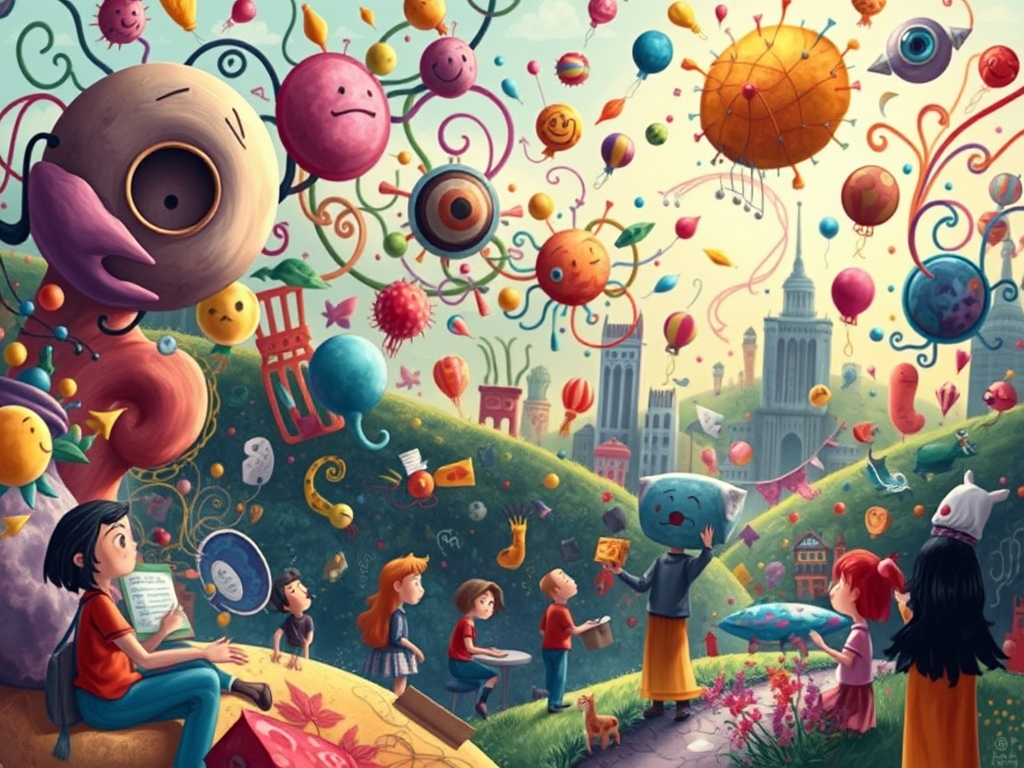
Naturally, this revelation sent me spiraling down a rabbit hole of research, because curiosity isn’t just a trait—it’s a lifestyle. That’s when things got really interesting. You know how you start by Googling one thing, like “traits of ADHD,” and suddenly it’s three in the morning and you’re watching a video about the history of fonts? Yeah, that was me, except replace fonts with cognitive processing styles and neurodivergent patterns. Turns out, the stuff I thought was random weirdness was actually a pretty common thread among people who identify as neurodivergent. Dreaming in colour? Check. Vivid internal monologues? Double check. Hyper-imagination with a side of chaotic humour? Triple check, and can I get an honorary badge for that?
Apparently, the brain’s wiring in folks like us tends to lean heavily into sensory-rich experiences. In other words, we’re not just daydreaming about a beach; we’re mentally feeling the sand between our toes, hearing the waves crash, and arguing with ourselves about whether sunscreen smells like coconuts or misery. And those book characters who live rent-free in my head? Turns out, creating voices for them isn’t just a quirky pastime—it’s a marker of strong auditory processing skills. Like, who knew my brain was flexing its muscles every time I decided that a side character in a novel needed to sound like a heavily caffeinated Steve Buscemi? Yet I have an auditory processing disorder, might explain why reading is hard when I am way to overloaded despite the calming effect… no no more rabbit holes today just no! Who am I kidding, I will end up down it at some point.
Oh, and let’s not leave out the part where I talk to myself in my mind. I used to think this made me borderline bananas, but according to my dive into neurodivergent traits, it’s not only normal—it’s kind of brilliant. It’s called inner dialogue, and in some cases, it’s a coping mechanism or even a creative outlet. I mean, who needs therapy when you can self-analyze in the voice of your favourite movie star.
And let me just say, once you start realizing you’re not alone in this chaotic brain circus, it’s like someone handed you front-row tickets to a show you didn’t even know you wanted to see. Suddenly, all those quirks that made me feel weird or out of place started to feel like superpowers instead. Sure, I might get distracted mid-sentence because my brain decided to replay a scene from a book I read ten years ago, but can we talk about how cool it is that my brain *remembers* that scene in exquisite detail? You’ve got to admit, that’s a little impressive.
Now, does this self-discovery mean I suddenly have my life together? Absolutely not. My brain still feels like a pinball machine half the time, but at least now I know why. And knowing is half the battle, right? I might not be able to control how fast my thoughts run or how loudly my inner voices argue about whether Batman could beat Superman, but at least I can appreciate the beauty of the chaos.
It’s funny, isn’t it? How the very things that make us feel like outsiders can also be the key to finding people. Because that’s what happened next—the moment I realized I wasn’t alone in this topsy-turvy inner landscape, I started connecting with others who saw the world through similarly kaleidoscopic lenses. These weren’t just casual conversations, either. They were full-on bonding sessions over everything from hyperfixations to sensory overloads, like we’d all been speaking the same secret language without knowing anyone else could understand it. On top of the usual trauma dump of course.
I stumbled into online forums, followed creators who shared their own beautifully chaotic experiences, and even dipped my toe into the world of neurodivergent memes (because who doesn’t love a good laugh at their own brain’s expense?). The more stories I heard, the more I saw bits of myself reflected back. It was like holding up a mirror that didn’t just show the cracks but reframed them as intricate patterns in the stained glass of my identity. Every quirk, every “odd” trait suddenly became not just acceptable but valuable—a unique puzzle piece in the ever-expanding mosaic of human diversity. Not that they know I stumbled in there, I tend to be quiet in groups.
And that’s when it hit me: maybe the goal isn’t to quiet the chaos but to learn how to dance with it as I have established. Sure, my brain might insist on narrating my grocery list in the voice of David Attenborough or convincing me that the texture of certain fabrics is a personal vendetta from the universe, seriously some of it seriously has a vendetta. But perhaps that’s part of the magic. Perhaps the very things that make my thoughts feel like a whirlwind are the same things that allow me to see the world in vivid, technicolour detail.
So, here’s to dreaming in colour, giving imaginary voices to fictional characters, and occasionally getting lost in our own thoughts. If you’ve ever felt like your brain was the offbeat drummer in a world full of synchronized dancers, take heart—you’re not alone. In fact, you’re probably just neurodivergent enough to make the world a little brighter, a little weirder, and a lot more interesting. After all we do see things differently, it is a known fact.
 Who am I?
I would love to hear from you!