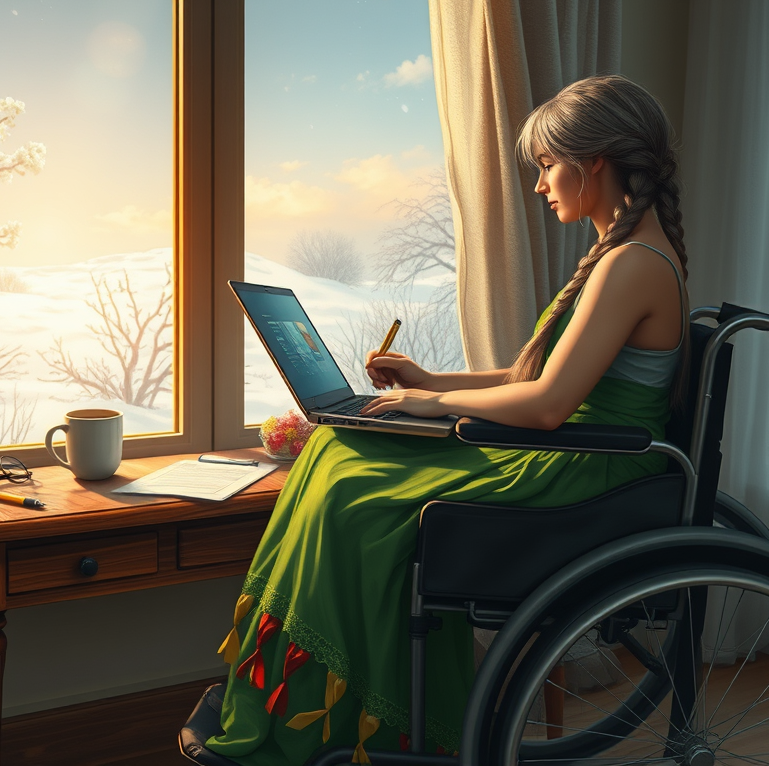

Have you ever woken up and felt the weight of the world on your shoulders? That was me this today. For me, that weight often comes in the form of multiple diagnoses. In many cases, there was relief—knowing what you’re battling is a big part of the fight. However, the flip side is how society views those who have more complex issues than needing a pair of glasses.
The heartbreak sometimes comes because your life just got shaken up, and now you need to rebuild yet again. You lose friends, and your family distances themselves. No one wants to think about the fact that it could be them. Society greatly rejects you, and this can take a mental toll that is far greater than many realize. You feel broken, you feel like you’re not good enough, you feel like you can’t give back to society, you feel like a failure… all these things and more just from a diagnosis.
The Weight of a Diagnosis
I’ve had this happen more than a few times. Some diagnoses feel relieving because now you get a bit of who you are and why you do things, which means you can hide that difference better—not a healthy thing but a way to survive in this world of ours. Most often, it means more work to do the basics, less time for employment, and it can even lead to feelings of being a drain on society, especially if one or a combination of the diagnoses you are given makes it so you cannot work in the way society expects you to.
It’s not the number of diagnoses you have or don’t have; it’s the mental impact that causes these feelings. Without the right support network, signs get missed, and you take the easy way out because you hurt so much mentally.
There’s a reason mental abuse is worse than physical abuse. Physical abuse leaves visible scars and bruises that eventually heal, but mental abuse leaves invisible wounds that can last a lifetime. For example, being constantly told that you’re worthless or that you’ll never amount to anything can erode your self-esteem and self-worth over time. The same goes when it’s your own body abusing you—it’s a double whammy.
The Importance of a Support Network
Trying to fight through all this, especially with society not being accepting of those who are different and the rejection, it’s hard to get to the point where you can say, “I am not my diagnosis.” Sometimes you’re always fighting to get to that point.
It’s easy to say, “I am not my diagnosis,” but a lot harder to believe it. You need a support network—one that accepts you as you are, where those few trusted people you open up to the most accept whatever method it is that you are making yourself vulnerable in. You may not even realize you’re doing it because it could take the form of fantasies, wishes that you share… as an example. Yet you need that person to accept those as what’s on your mind because often accepting those things you actually mention is a mask for what you really need acceptance for.
You don’t need a large network; you just need some kind of human support that is not a professional or a stranger online. You need just a few people who accept who you are, how you express yourself, and how you find hope, no matter what it looks like. It could be a cuddle pile or going out to the movies. When you get this acceptance, you accept yourself for you, not your diagnosis. It’s a big step towards “I am not my diagnosis.”
I have found finding that person, though, is hard, no matter what world it may be in. However, sometimes a stranger online can be that lifeline. It may not be the same as having someone physically present, but it can make a huge difference. Connecting with someone who understands your struggles, even from afar, can provide a sense of belonging and support that is invaluable.
The Challenge of Unmasking
With ASD, earning the trust of someone so they open up to you is incredibly challenging. People with ASD often become masters at masking their true feelings and thoughts as a survival mechanism in a world that doesn’t always understand or accept them. This masking can make it difficult to know what they’re truly experiencing. To gain their trust, you need to be patient, consistent, and genuinely empathetic. It requires creating a safe and non-judgmental environment where they feel comfortable being vulnerable.
This trust is not easily given, and it can take a long time to build. But once you have it, it’s a profound connection. However, even with this trust, they might still mask and hide pain due to past trauma. Every time someone rejects them because of something they can’t control, it becomes harder for them to open up again to that person or anyone else. The fear of rejection is real and deeply ingrained.
Now, imagine dealing with multiple diagnoses on top of ASD. The layers of masking and the fear of rejection multiply. Each diagnosis adds another layer of complexity and another reason to hide. The mental toll is immense, and the effort to unmask and be vulnerable becomes even more daunting. It’s not just about unmasking one aspect of yourself; it’s about unmasking multiple, deeply intertwined aspects. The fear of rejection is compounded, making it even harder to trust and open up to others.
I should know, I deal with both. Unmasking the physical impacts of some of my diagnoses is so much harder than opening up and unmasking with ASD, to me this really says something. I am damn good at hiding my pain, forcing my way through whatever because ASD is genetic and there since birth, so you have years to master masking. I have yet to not feel rejected by revealing even part of the physical impacts of my laundry list of diagnoses.
The pain, you can manage, you can take meds to help, go to physio or other medical professionals… in other words, you can treat physical and adjust with the tools out there. Well, for the most part, that is. There are many options, while it is more visible and not as easy to hide, trust me, there is a lot still hidden that you do not see. There is not this option for psychological impact on life.
Yeah, there is therapy, and groups and all that stuff, it is not the same as having someone accept you for who you are that you are close enough to trust with your vulnerabilities. Quite frankly I do better without those supports. They don’t do so great with my combination of psych stuff.
When you let someone in, and open up you are giving them ways to hurt you when you reveal the depth of the physical impact of some diagnoses, ways to easily break you, you are trusting someone with everything you are. This leads to the mental fight and makes that one harder. It is circular, yes, however, when someone opens up like this, no matter what it appears to be, it is a sign of massive trust.
You are trusting that person to understand “I am not my diagnosis.” So when told “well contact me when you want to hang out” makes it seem like you have a choice in what your body is doing and you just don’t want to hang out. It is impossible to not blame your body and dislike it that much more. This causes steps backwards in the journey that is chronic diagnosis path.
Holding Onto “I Am Not My Diagnosis”
“I am not my diagnosis.” I love that saying. I try to live by that saying. I just wish those around me would understand this as well. I don’t drag my heels to hang out because I don’t want to; I drag my heels because I literally cannot leave my jail cell called home because of this medical crap.
Hell, I get why so many of our elders still look to keep busy and doing things, retirement is much like what I go through. It’s nice at first, then it gets real lonely and real hard because you have too much time to think. It can be dangerous, I am not sure why, but our minds like to hurt us the most. Every morning I say those words to myself and do my damndest to live my day my way, not the way my long list of letters say I should.
It is hard as hell to do, it does not always work, sometimes you spend nine hours in the bathroom just getting to the point you can keep something down long enough to stop throwing up. Those days, those are when you need that person the most, and if you have been burned enough, odds are you do not have that person. I thought I did. Now I am not so sure any longer.
In this world, it is hard to hold onto those simple words, “I am not my diagnosis.” It is a battle every day to live by them. Some days I just can’t get my fingers onto that saying enough to hold on if I can even reach it. Some days I am holding onto it for dear life; other days I am relaxed on it, reading a book and eating my peanuts.
One text message not thought out is enough to make it harder to hold onto those words for the day. One text message can do untold amounts of harm and pain that the person who sent it may never know.
Like The Mindful Migraine Blog creator said, it is like a garden. You have to nurture and feed this “I am not my diagnosis” plant. You need to be patient with yourself, sometimes you need to trim a leaf that is not doing so well, sometimes you need to address those annoying gnats… such as by switching from soil to leca and doing semi-hydroponic. When you have weather extremes you need to take the time to ensure that plant has the temperature it needs, even if it is just in that one area. It is a powerful metaphor that is for sure and a very true one.
For myself, I am a warrior, each day is a battle, and life is the war. However, I never clarify what I mean by this exactly. To me, my bow is a longbow, it needs care and attention regularly. My bow is Wisdom. Then I make my arrows, taking the time to make sure the shaft is straight, at every part of it is as I need it to be. Those arrows are Truth. The truth I have to face to make those arrows. Sometimes you nick yourself on the arrowhead, other times everything just works well and goes perfectly and boosts your confidence.
I am not a warrior that goes to the front lines, I am the warrior that stays back, makes sure the village is safe as well as those who may not be able to defend themselves are safe. This represents my nature as a healer, sometimes healing means more pain. Most times healing another person can help you heal. I stand in front of others, and help them avoid the pain I have gone through or am going through. I tend to do this better for others than I do myself, won’t lie. However, standing there for them gives me the strength to pull back on that bowstring and defend myself in ways that are small but the impact is massive. The arrow that gives me a fair bit of issues is the “I am not my diagnosis” I am always having to remake it. However, I am still here to remake it and willing to remake it as often as needed.
Call to Action
If you’ve ever felt the weight of a diagnosis or struggled with the mental toll it takes, know that you are not alone. Share your experiences in the comments below, and let’s support each other on this journey. This is a safe space, I will never judge. Help me by letting me help you.
 Who am I?
I would love to hear from you!