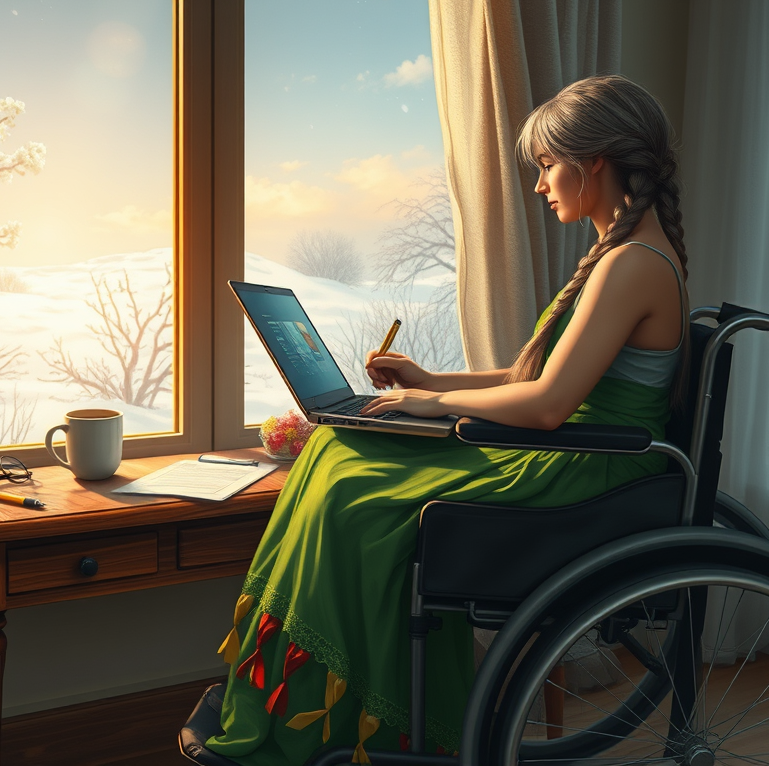

This morning, as I sipped my coffee, I found myself reflecting on the practice of journaling—a simple yet transformative act that has quietly become a part of my life. The realization struck me suddenly: I have only been writing for a few months, yet today I see it for what it truly is. So after some reflection and AI assisted internet research, I decided that this was something to share right here.
I have been journaling, though not in the way I once imagined or struggled with for years. My history with journaling is complex, rooted in experiences that made it feel anything but safe. As a teenager, I often found my private thoughts exposed.
My father would seek out my journal, read my entries, and punish me—not for actions I had taken, but for the thoughts I had dared to express on paper. It was a painful lesson: my inner world was not my own. I was taught that my thoughts were bad, that even thinking certain things was forbidden, and that my reflections needed to be corrected.
Journaling, which could have been a lifeline during the messy years of growing up, became a source of shame and fear—a tool of control rather than freedom. These actions were dangerous because they broke the trust essential for healthy emotional development.
A journal is meant to be a private space—a sanctuary for thoughts and feelings that may be too complex or vulnerable to share aloud. Violating that privacy instills fear, suppresses expression, and undermines self-worth. It teaches a person to doubt their own thoughts and emotions, leaving them feeling trapped and isolated.
In my case, this behavior went beyond mere violation of privacy. It became a pattern of control, forcing me to internalize the belief that even my innermost thoughts were unacceptable and subject to punishment. Looking back now, I see this for what it truly was: emotional abuse.
While my father may not have physically harmed me in this context, his actions inflicted psychological pain, leaving scars that shaped how I view self-expression to this day. The act of reading my private thoughts and punishing me for them wasn’t just invasive—it was an abuse of power that took away the safety I needed to navigate my emotions during the formative years of my life.
As I reflect further, I can’t help but wonder: could this abuse have left me more vulnerable to the dangerous, abusive relationships I’ve encountered throughout my life? It seems likely. When trust and safety are broken during formative years, it shapes how you perceive yourself and others.
For me, it fostered the belief that my feelings, boundaries, and self-expression didn’t matter. That control and punishment were somehow normal in relationships. This left me blind to red flags and unable to assert my worth, opening the door to patterns of harm that were far too familiar.
Earlier this morning, as I started to reflect while the coffee brewed—before I began writing this entry—I found myself turning to Copilot AI for clarity. I needed answers. I know that AI can comb the net faster than I can, especially when I’m still half asleep (lol).
I wanted to know if my sudden suspicions about the connection between what my father had done—violating my privacy and hunting down my journal every chance he got—and my later relationships were valid. The answer was clear: yes, it had left me more vulnerable.
Research confirmed that childhood emotional abuse like this disrupts the fundamental trust and security needed for healthy emotional development. This disruption often creates a template for harmful dynamics in adult relationships because the “love map” is not formed properly, making it harder to recognize red flags or establish healthy boundaries.
This realization ties directly into journaling, as writing about these connections could have allowed me to process and unpack the deep-seated patterns that have shaped my life—and perhaps see the danger sooner. It’s a hard truth to face, and it completely blindsided me this morning, but acknowledging it feels like an essential part of my journey to heal.
I realize that this behavior from my father let people in like my last ex, who put me through hell and taught me as a Native woman that I can’t trust the cops. To know my own father contributed to this being even possible because I had no place to put things and was trained that my behavior, words, and thoughts were wrong and needed fixing is devastating.
It has taken me hours to write this because of the profound realization of what this curiosity has made come to light. I am glad it did. To me, this is a positive post. Yet it is also heartbreaking to know how much could have been avoided in so many ways.
I knew my father was way out of line in a lot of things, yet this—knowing this—has its own devastation tied to it. Still, this morning marked a turning point. I realized that the daily posts I’ve been sharing are, in their essence, journaling. For the first time, I’ve found a way to express myself where judgment and punishment don’t follow.
Today, one of those deep marks—one of the lingering wounds—began to heal. Today, the power of journaling is in my hands, and now I know it. It feels different, as though the bandaid is finally being replaced with genuine care. It is no longer an attempt to mask the pain but a step towards true healing.
A scar will always be there, and yet as painful as it is to realize this impact from when I was a teen contributed to so many things, it is a good thing. It means I recognize one more area to build with myself; I recognize a powerful tool lost to me. More importantly, I have that tool back in a way that matters to me.
It may have taken a long time to write this entry, with lots of tears, yet ultimately I feel one less chain holding me back. One more step towards freedom and one more step to learning who I am—not what I have presented to people for years through masks.
I even opened up about one really bad thing that happened with my ex to a best friend from high school. I found a second person I can go to. It means the stuff I want to shield my sister from that is hard for me every day, I can do that because I now have rekindled that bond with him.
My background in medicine and interest in psychology have always underscored the importance of journaling. I’ve long known that it’s not merely a tool for organizing thoughts but a vital process for emotional well-being. Journaling allows us to externalize our feelings, process complex emotions, and uncover patterns in our thoughts and behaviors.
It promotes mindfulness and self-awareness, helping to regulate stress and foster clarity during difficult times. Despite fully understanding its value, my past experiences with journaling had left a barrier that I struggled to overcome. Yet, over the years, I tried again and again to reclaim this practice, exploring countless methods in my search for one that felt right.
It wasn’t until now, as I reflect on the daily posts I have been sharing, that I realized I had already found my way back to journaling. What I’m doing here—writing openly, letting my thoughts flow, sharing my voice—is exactly that. It isn’t traditional journaling, but it is mine. And in this space, I am free.
Here, there is no judgment or punishment. My words are heard, and even if only one person listens, that is enough to make it worthwhile. This safe space has become a sanctuary where I can process emotions, reflect on experiences, and find clarity in the chaos of life.
Writing in this way has become a mindful act, one that complements the natural processes of my mind and allows me to explore my thoughts more deeply than I ever could in silence or sleep. The journey to this moment began with a conversation I had just a few months ago.
After reaching out to a mental health crisis line, I was connected with a psychiatrist who saw through my mask—something few have been able to do. In just one session, he helped me find better balance with my medications and suggested I use a domain I had owned since 2023 but never utilized, this very domain here.
Importantly, he didn’t call it journaling. Instead, he encouraged me to write about the challenges I face with my poetry and fictional writing, shaped by my disabilities—both mental and physical. Had he framed it as journaling, I suspect the mental block that has kept me from engaging in this practice might have persisted.
His advice, however, resonated in a way I didn’t fully understand at the time. Now I see its brilliance: in writing about my struggles, I have found healing. In its brilliance, writing about my struggles opened the door to writing about so much more. In such a short time, my mental health has improved to levels I’m not sure I have seen before. It feels good.
Writing has become an anchor in my life. On days when my thoughts threaten to spiral into darkness, journaling gives me a way to release them, stripping them of their power over me. It helps me face each day with a clearer mind and a calmer heart.
When I encounter writer’s block, this practice provides a space to work through it, to reconnect with the flow of my creativity. Most importantly, it allows me to be fully, unapologetically myself—a self I am still discovering with each passing day.
Through journaling, I have become more attuned to my emotions and gained a deeper understanding of who I am. It has introduced me to new communities, blogs, and resources across a wide range of interests. Writing has also opened the door for me to share not only my struggles but also my insights, lessons, and moments of growth—perhaps offering comfort or inspiration to others on similar journeys.
Even the darkest thoughts, which once had the power to paralyze me for days, now fade more quickly. The act of writing shifts my perspective, bringing me a sense of peace and resilience. The difference is profound, and for that, I am deeply grateful.
Journaling reduces stress in ways that are both subtle and transformative. It clears mental clutter, fosters self-connection, and creates a bridge between inner chaos and external calm. For anyone hesitant to begin, my story is proof that journaling doesn’t have to follow a traditional format.
It can be messy, unconventional, and deeply personal. What matters is creating a space where your thoughts can flow freely—a mindful moment that nurtures clarity, understanding, and healing.
Journaling as I have learned today can take many forms that do not match the first thing you imagine when you mention the word. So I ask you this. How do you journal?
 Who am I?
I would love to hear from you!