
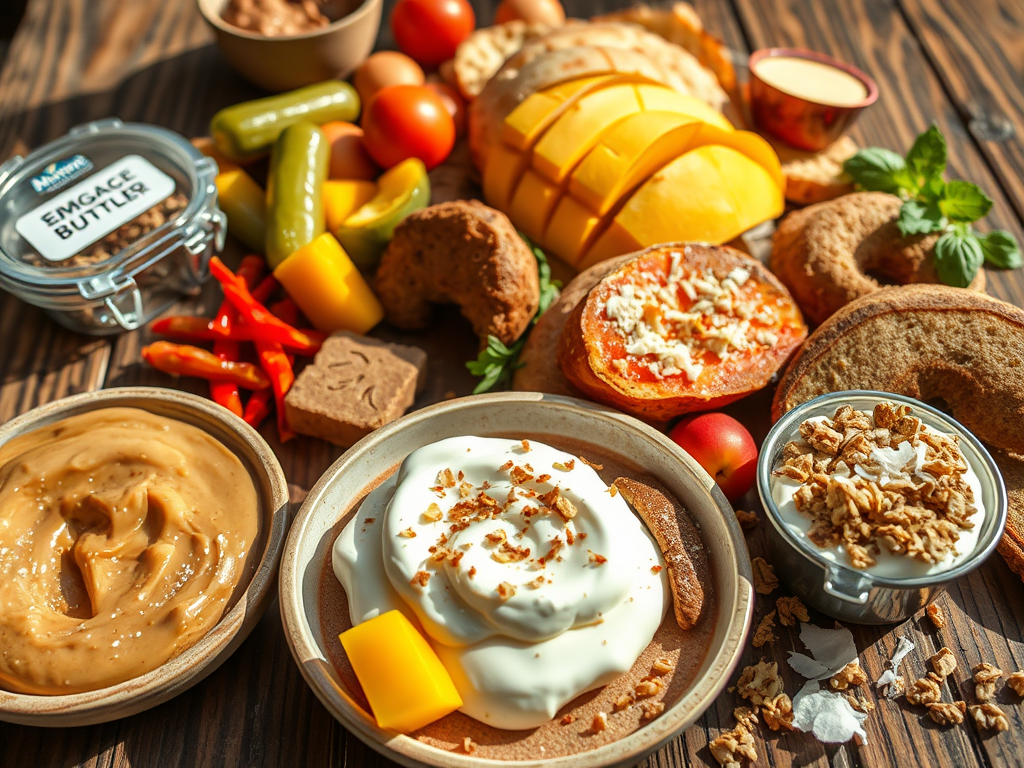
I went to grab lunch, just looking for something simple. Nothing exciting, nothing groundbreaking—just food. But my brain had other plans. As I stared at my options, I found myself questioning everything. Why do we follow food rules? Who decided that certain flavors belong together while others don’t? Before I knew it, I wasn’t just eating—I was diving into the wild world of unconventional food combinations.
Between me and what I found? Wow.
Traditional food rules are designed to be logical. Sweet-and-savoury pairings, like meatballs and spaghetti, evoke comfort through their time-tested balance. Yet I struggle to adhere strictly to these expectations. Who said pizza isn’t a breakfast food? Why is pairing peanut butter with pickles considered a crime?
For centuries, cultures have shaped food conventions, defining which ingredients complement one another while others remain separate. The French have mastered balance, Italians embrace simplicity, and Asian traditions expertly weave umami by blending sweet, salty, sour, and bitter elements. But following rules isn’t the only way to enjoy food. Some of the best flavors come from breaking conventions, and let’s be honest—without rebellion, we wouldn’t have deep-fried Mars bars.
Street food has been challenging norms for decades, pioneering bold combinations long before fusion cuisine became mainstream. Vendors experiment with flavors that traditionalists wouldn’t dare attempt. Food should be an experience, not just a structure. These unconventional combinations aren’t mistakes; they are proof that rules were meant to be broken. Churros with chocolate sauce wouldn’t exist if people always played it safe.
Spontaneity over tradition leads to some of my best discoveries. Have you ever thrown random ingredients together just to see what happens? That’s exactly how I stumbled upon my favorite snack—vanilla yogurt with shredded coconut, a few drops of vanilla, granola, and cumin. It doesn’t follow any known food logic, but it works. Each texture plays a role—the smoothness of yogurt, the crunch of granola, the chewiness of coconut. The touch of cumin seems out of place but adds surprising depth. Who knew defying expectations could taste this good?
Peanut butter and pickles follow the same chaotic principle. At first glance, the combination seems absurd. Why would vinegar and peanut butter ever belong together? Yet the acidity cuts through the rich nuttiness, while the pickle’s crunch balances the thickness of the peanut butter. Hesitation ruins the experience, but full commitment delivers an unexpectedly perfect balance.
Mango with chili powder takes things even further. It’s not just about taste—it’s about presence. The first bite of mango is soft and sweet, pulling my senses into focus. Just when my brain settles in, the chili powder interrupts, creating a shock that demands attention. It jolts me out of autopilot and forces my mind back into reality. When done right, it’s a full reset. When done wrong, it’s sensory overload. The line is thin, but the payoff is worth the risk.
Food isn’t just indulgence—it’s survival. Every bite requires calculation, every flavor a decision. These chaotic pairings aren’t random experiments; they are methods of self-preservation disguised as creativity. They challenge expectations, push boundaries, and serve as reminders that logic doesn’t always lead to the best results.
What’s stopping me from exploring even further? Peanut butter and pickles, mango with chili powder—these were just the beginning. There has to be more. Somewhere in the fridge, tucked behind familiar ingredients, waits the next bizarre masterpiece. Something I’ve dismissed a hundred times, never realizing its potential.
Food has always been about discovery. Sometimes, structure fails, and instinct takes over. That’s how I find my best flavor combinations—through pure experimentation, curiosity, and a refusal to follow the rules.
Pregnancy cravings exist in an entirely separate realm. Logic does not just bend; it collapses under the weight of unrelenting impulse. The moment passes, reality returns, and regret sets in.
Caesar salad with colored marshmallows, iceberg lettuce instead of romaine, and a cut-up boiled egg. A combination both unforgivable and absolutely necessary. The crunch, the sugar, the chaotic blend of texture and flavor. Everything made sense at the time. Retrospect disagrees, but that does not mean I regret it any less.
Marshmallows, soft and absurdly sweet, should never collide with Caesar dressing, sharp with garlic and anchovy. Yet somehow, during pregnancy, the sugar took just enough of the edge off to make the dressing feel smoother, more tolerable, almost enjoyable in an entirely different way. Iceberg lettuce, miles apart from the richness of romaine, introduced pure crispness and water content, making the entire salad feel lighter, safer, manageable. The boiled egg was just there, existing, providing some level of normality amidst the disaster on the plate.
Pickles dipped in Nutella push beyond reason into something worse. The creamy sweetness tricks my tongue into believing it belongs, creating just enough confusion to justify continuing the experience.
Everything about pickles demands sharpness. Acidity wakes up the senses, saltiness lingers long after the bite. Nutella is the exact opposite. Thick and smooth, aggressively sweet. Putting them together should make no sense. Yet the contrast works too well, each bite pulling together everything my brain demands in one bizarre, incoherent mess. A little crunch, a little creaminess, a battle between sweet and sharp that never fully resolves itself. It is weird. It is so wrong that it loops back to being right.
French fries dunked in honey feel less like a mistake and more like a primal necessity. Comfort disguised as brilliance. Salty, sweet, somehow familiar despite being fundamentally wrong.
Something about deep-fried starch demands sugar. Maybe it is science, maybe it is psychology, or maybe it is just something buried deep in the human brain. The crispy edges catch the honey just enough to make each bite burst. The contrast feels intentional rather than chaotic, balancing flavor instead of overwhelming it.
Pregnancy cravings bend food logic, but they are not the only bizarre eating behaviors out there. Food traditions stretch beyond simple ingredients, shaping entire cultures with eating methods that feel just as absurd as dipping fries in honey.
The Romans did not just feast; they sprawled sideways on couches, refusing to sit upright, letting indulgence dictate their posture while tearing apart roasted meats and figs. The entire meal became a full sensory experience, dragging itself out for hours and turning food into an immersive ritual rather than just sustenance.
The Egyptians embraced side-lying dining as well, tying it into hierarchy and tradition. Meals were not just about nourishment; they carried spiritual significance, food linked directly to the gods. Bread was not only sustenance. It was currency, a sacred offering, a symbol of stability passed through generations.
Greek dining customs carried their own chaotic energy. Meals were often communal, stretching for hours, accompanied by conversation, wine, and philosophical debates that spiraled into the night. Food was not just consumption. It was a moment of reflection, a social ritual, an excuse to question the nature of existence over platters of olives, cheese, and fresh seafood.
Japan has one of the more famous eating customs: slurping noodles loudly. Not only is it accepted, but encouraged. The idea is simple. Slurping aerates the broth, enhances flavor, cools the noodles slightly, and most importantly, shows respect for the meal. Meanwhile, western cultures have vilified the sound, branding it rude and unacceptable despite the logic behind it.
China has its own strict eating customs, and one of the most well-known involves chopstick etiquette. Leaving chopsticks standing upright in a bowl of rice is highly disrespectful, resembling incense sticks used in funerals. Passing food directly from chopstick to chopstick is another taboo, mirroring the way bones are handled during funeral rituals. These rules are not just manners. They carry deep cultural symbolism that outsiders often do not realize.
Food traditions dictate not just what should be eaten, but how it should be eaten. In Ethiopia and India, eating with hands rather than utensils is not just custom, it is essential. Bread becomes a tool, scooping up stews and curries, blending textures without silverware dividing the experience. Meanwhile, other cultures see eating without utensils as undignified, even though humanity survived just fine without cutlery for centuries.
Some traditions defy common sense entirely. Russians have historically chased shots of vodka with salted fish, an intense, oily contrast meant to heighten rather than neutralize the alcohol. Thailand favors spoons over chopsticks for certain dishes, creating an unspoken utensil hierarchy. Italians stretch meals across hours, transforming food into a slow-burning social experience. American fast food culture encourages inhaling meals in minutes, barely tasting anything before moving on.
These customs clash with modern eating behaviors in ways that sometimes feel unhinged. Some people refuse to let different foods touch on their plate, separating everything before eating. Others compulsively eat candy bars with forks and knives, turning junk food into an artificial fine dining experience. Then there is the habit of eating pizza backwards, crust first, to “balance out” the cheese and sauce ratio.
Pineapple on pizza is the eternal debate that refuses to die. Originally an act of culinary defiance, it has transformed into a cultural battleground. Some see it as an abomination, others as perfection. Either way, it started as one of those food choices that made people recoil, only to eventually carve out a place in the mainstream. Just like peanut butter and pickles, just like mayo and ketchup, just like all the other chaotic combinations that should not work but do.
Eating customs get even more absurd when looking back at medieval practices. Trencher dining was not just about food. It was about the plate itself becoming part of the meal. Thick slabs of stale bread replaced actual dishware, absorbing juices, oil, and sauce from whatever was piled on top. Once the meal was finished, the bread-plate had two options. It could be eaten as part of the meal or discarded entirely. Sometimes it was fed to animals, sometimes given to the poor, sometimes just abandoned to rot. The concept of soaking flavor straight into the serving vessel seems clever until realizing hygiene was barely considered.
Food behaviors extend beyond ingredients into texture and ritual. Japan’s infamous “odorigui,” meaning “dancing food,” involves consuming live seafood. Small fish or shrimp are meant to be swallowed whole while they are still moving, adding an entirely new sensory layer to the experience. Meanwhile, food influencers have introduced their own obsessive eating habits. Some insist that every bite of a meal needs to be perfectly stacked with every ingredient in equal proportion. Others refuse to eat sandwiches normally, tearing apart individual components bite by bite. Food has shifted from nourishment into ritual, rebellion, and performance.
Food has never been just food. It is history, instinct, culture, impulse, and sometimes pure madness. Whether it is ancient dining traditions or modern food rituals that make no sense, the way people eat has always been unpredictable. If history is any indicator, the things that seem absurd now might just be accepted later.
What is stopping me from experimenting? Maybe the next great chaotic food discovery is waiting in my fridge. Maybe it is time to break a few more rules. I would love to hear what other rules people think are good to break and other weird food mash-ups.
 Who am I?
I would love to hear from you!