
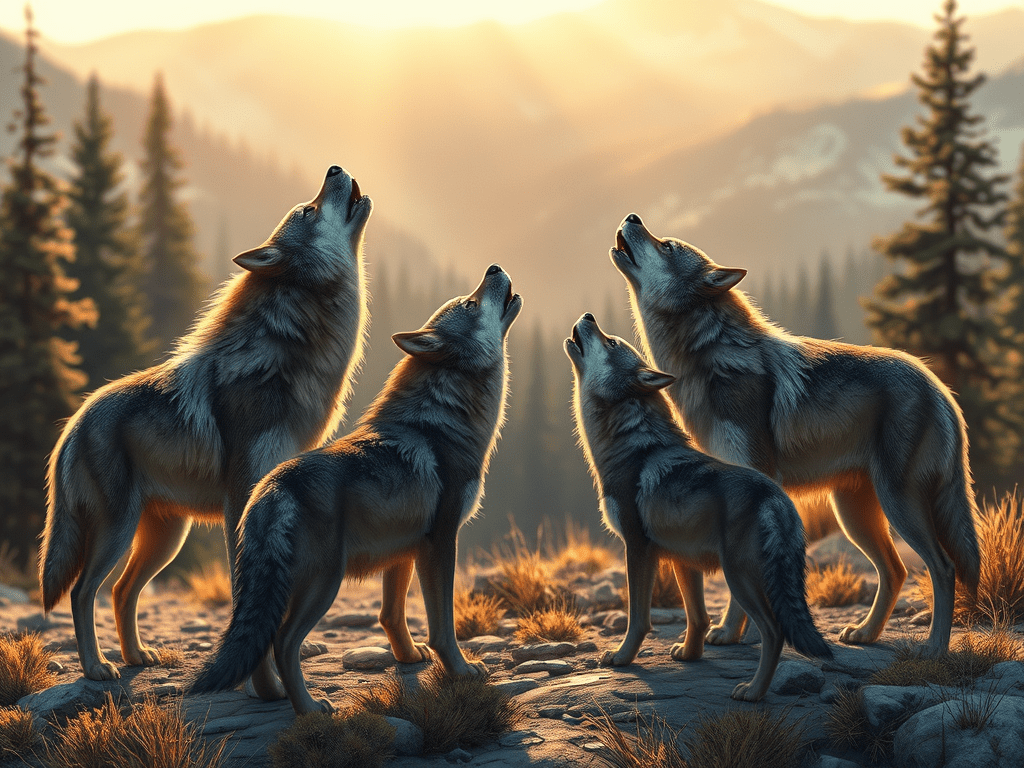
Alright, back to the heart of it social rituals and communication, the true art forms of the Rocky Mountain wolves. These wolves don’t just survive; they orchestrate their lives with a complexity that rivals any human society. Imagine being in a world where every movement, sound, and glance carries meaning. That’s what life is like for these wolves. Thank you to the novel I was reading for inspiring this deep dive into wolves today.
First, let’s talk about their pack dynamics. Rocky Mountain wolves have a tightly knit social structure centred around the alpha pair, the leaders of the group. This isn’t some tyrannical rule; it’s more like a well-oiled machine. The alpha pair sets the tone, deciding when the pack will hunt, where they’ll roam, and how they’ll respond to threats. The rest of the pack betas, subordinates, and juveniles fall into clear roles, but the whole structure works collaboratively. It’s hierarchy, yes, but with a lot more nuance than the word usually suggests. Cooperation is vital, especially when hunting prey as elusive and agile as elk or mountain goats in the rugged terrain of the Rockies.
Communication is the glue that holds all of this together. The wolves use a rich tapestry of vocalizations, body language, and even scent-marking. Their howls are legendary, of course, but they’re more than just eerie calls in the night. A howl can signal anything from a territorial warning to a rallying cry for a hunt. The acoustics of the Rocky Mountains add a unique twist to this. Their howls carry farther and resonate differently in the valleys and alpine forests compared to wolves in flatter terrains. It’s as if the mountains themselves amplify their voices, making their calls a communal broadcast for anyone or anything within earshot.
But it’s not all about the howling. Body language plays just as critical a role. A simple wag of the tail, a lowered head, or a sideways glance can convey submission, dominance, or curiosity. When you watch a pack interact, it’s like observing an entire conversation unfold without a single word spoken. The wolves are masters of reading each other’s cues, and this silent dialogue ensures that the pack operates in harmony. Even the smallest pups pick up on these signals, learning the rules of engagement from an early age.
Scent is another powerful tool in their communication arsenal. Rocky Mountain wolves use scent-marking to define the boundaries of their territories and leave messages for other packs. It’s like a wolf version of a bulletin board: “Occupied. Keep out.” But it’s also used within the pack, helping individuals identify one another and strengthen social bonds. The unique topography of the Rockies means these scent markers fade differently compared to other regions rain, snow, and wind all play a part but the wolves adapt, refreshing these markers as needed to maintain their presence.
When it comes to social rituals, play is crucial. It might look like roughhousing, but there’s a method to the madness. For pups, play is a way to learn the rules of the pack, practice hunting techniques, and build physical strength. For adults, it’s about reinforcing bonds and easing tensions. Even at their most ferocious, these wolves never lose sight of the connections that hold them together. Watching them play is like seeing a family at its most genuine, a reminder that even in the wild, relationships matter.
Compared to wolves in other regions, the Rocky Mountain wolves have honed these social and communicative behaviours to navigate their unique environment. Their adaptability is key. The mountainous terrain demands more coordination during hunts, more vigilance in maintaining territories, and more resilience in surviving harsh winters. Their howls, body language, and scent-marking are all finely tuned to their surroundings, creating a social system that’s both flexible and deeply rooted in tradition.
So when I think about the Rocky Mountain wolves, it’s not just about the wildness or the beauty it’s their intelligence, their ability to communicate and cooperate that leaves me in awe. These aren’t just animals following instinct; they’re living, breathing examples of how complex and interconnected life in the natural world can be. It’s a reminder that even in the most rugged corners of the Earth, there’s an order, a rhythm, and a language that binds it all together.
What do you think we could learn from wolves and what would be the most important, top of the list of what we can learn behavior that you think we would all benefit from? Personally I think the working together would be a good one.
 Who am I?
I would love to hear from you!