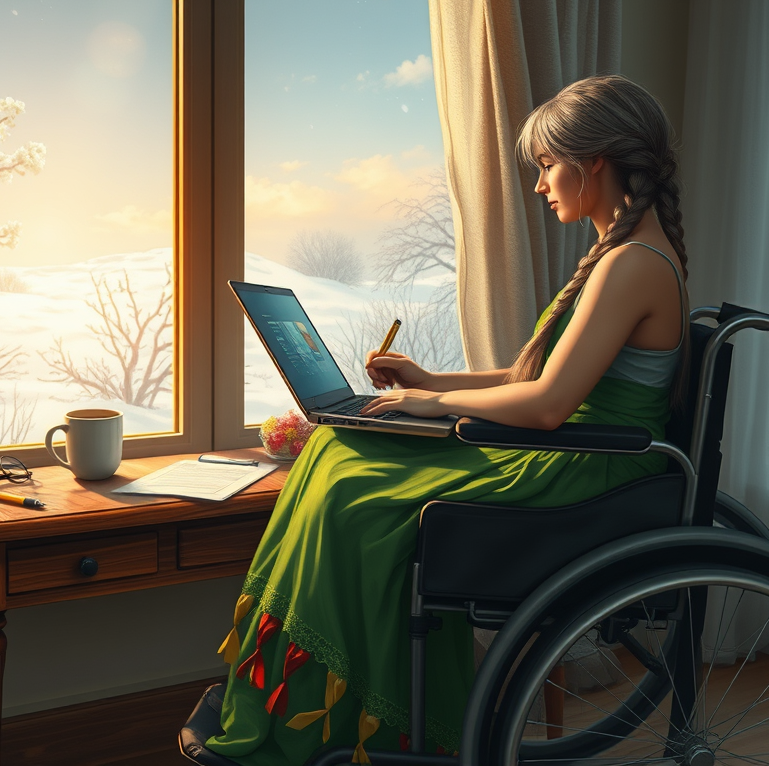

A little while ago, I embarked on the thrilling, edge-of-my-seat adventure of researching Canadian copyright laws. Okay, maybe “thrilling” is an exaggeration, but there’s definitely a certain chaos to deciphering legal jargon without falling into a boredom-induced coma mid-paragraph. My initial exploration was basic, akin to poking at a sleeping bear with a long stick, hoping it doesn’t wake up. But today? Today I decided to dig deeper, armed with nothing but my caffeine-fueled determination and a vague sense of impending doom, because I am finally ready, or so I think, to post bits of the book I’ve been crafting in my spare time. Figured I might as well share it. Though please don’t laugh… well not to hard… at my attempts to make it a less dry topic.
Drafting a book is one task; understanding how to legally protect it in accordance with copyright law is another complex challenge. Upon delving into Canadian copyright legislation, the initial realization was that my pseudonym, or pen name, required careful consideration. The use of a pen name offers the freedom to express oneself under a chosen alias but entails certain legal obligations. It is entirely permissible to utilize a pen name when publishing, particularly for an emerging blog or as a preliminary measure with one’s writing. This is what started my first round of digging into this abys of legal terminology and information overload. I forgot the Tylenol once, I didn’t do that again.
However, for long-term protection of your work, it is crucial to establish a documented connection between your pen name and your legal identity. This process involves registering the pen name alongside your legal name, ensuring that your creative persona is recognized and protected from the moment of publication. It is important to note that while this connection is essential for legal purposes, your real name does not need to be publicly disclosed; it can remain confidential in legal records until you are prepared to expand your publishing ventures.
To ensure the authenticity of my creative works and secure my transactions, I linked my Stripe and PayPal accounts to my legal name. This arrangement safeguards my intellectual property and simplifies the management of royalties and earnings. I do this because financially fully registering the name is not justifiable however I did find a way to keep myself and my work safe by digging and yes, a lot of help from ai to translate the jargon into something I could understand. Give me medical terminology and Latin any day of the week over this. There are beneficial uses to for AI in writing, as long as you don’t get it to do the work for you, it can save a lot of time and frustration.
Initially, you can use this setup without registering a pen name since there will be a legal paper trail that is easily traceable with legal access, which of course I have given I have the passwords to all the stuff needed and it is my information and therefor covered under a law called one party consent. I do mention this in some of my medical writings so wont go into detail here, save you from that black hole. I found out linking financial accounts directly to your legal name provides transparency and accountability, which can be crucial for tax purposes and legal disputes. It also allows for automated tracking of payments, ensuring that all incoming funds are properly recorded and attributed to the correct sources. Additionally, many payment processors and financial institutions require verification of identity for compliance reasons, and using your legal name can streamline these processes.
So, there are many boxes checked by this simple step, and in most cases, you already have these accounts set up given so much is done online. There is also the fact that I pay for the domain and my WordPress account through my credit card which is through my PayPal which is through my apple account which is connected to my provider. So, lots of paper to back up that I am Siearra Frost until I am ready to register my name. I have my emails set up the whole nine yards. My dad used to own a company, so a few tips and tricks learned there.
Furthermore, if you decide to operate under a pen name later, you can set up separate business accounts or entity structures that still trace back to your legal name, providing both privacy and protection while maintaining the integrity of your financial records. This approach offers flexibility as your career develops, allowing you to adapt your financial strategies without compromising security or authenticity down the road. As anyone who has followed me long enough or read older posts knows, I value being authentic and transparent as I possibly can. So it would make sense for me to share this information as well when you think about it that way. Ok my brain is in overdrive of overthinking things today. Which means this is probably pretty dry already.
Thus, taking the time to understand the nuances of copyright law and meticulously setting up your pseudonym connections is vital for any writer aiming for long-term success and protection. These measures ensure that your creative outputs are attributed correctly while maintaining the privacy and integrity of your real identity. It’s a thoughtful balance between public presence and private security, allowing writers to flourish under their chosen aliases without compromising legal rights.
Now, here’s where it gets even more intriguing: copyright protections extend far beyond Canada’s borders. Canada is a member of the Berne Convention, an international treaty involving over 170 countries. This treaty ensures that copyright protection for creative works applies not only domestically but also across member states. Essentially, the moment I publish my work in Canada, it automatically gains copyright protection in all participating countries. It’s like having a global security blanket for my creative output, no legal passports or bureaucratic travel visas needed. Plus the red tape avoided, yes please in all the ways yes can be said.
The Berne Convention sets a universal foundation for copyright laws, ensuring that authors’ rights are upheld worldwide. However, the details of enforcement can differ depending on the country. While the treaty provides overarching protection, individual jurisdictions may have unique processes or standards for handling copyright disputes. For instance, some countries may emphasize originality standards more rigorously than others, making it essential for authors to understand these nuances if international claims arise.
For me as a writer, this global safeguard is incredibly reassuring. It means that whether my words are read in Canada, France, or Australia, or even on some remote island, their originality and ownership remain protected. This international layer of copyright reminds me that creativity transcends borders, and the law recognizes the universal value of intellectual property.
It’s comforting, isn’t it? Knowing that your ideas, painstakingly crafted and emotionally poured onto the page, are safeguarded across oceans and time zones. Whether it’s a whimsical short story or a groundbreaking novel, the Berne Convention ensures that creative work remains yours, no matter where in the world it’s shared.
The next thing I learned was a delightfully surprising nugget: my work becomes copyrighted as soon as I post it. Just like that! No paperwork, no secret handshake, no solemn oath to the literary gods. The act of publishing it, even in the chaotic corners of the internet, is enough to stamp it with copyright protection. It’s like magic, only legal and without sparkly wands. But there’s a catch, this protection doesn’t mean I can slap my name on someone else’s work and call it mine. No, no, no. To avoid unintentional plagiarism, I make sure to run my writing through an AI-driven online check to ensure no eerily similar documents are floating around in cyberspace. And let me tell you, the paranoia is real. Every time the AI churns out the results, it feels like waiting for exam grades, hoping the professor doesn’t catch that you accidentally summarized their lecture verbatim. Which has happened, eidetic memory even if only in some areas sucks at times. Plus, this is a proper use of AI in writing.
Once I’m cleared of any accidental literary doppelgängers, I proceed with posting my work, fully knowing I’ve poured my heart and soul into it (along with an unhealthy amount of snacks and procrastination). As a writer, I recognize how much effort goes into crafting a piece. And it’s not just me, other writers, the unsung heroes of late nights, coffee spills, and existential crises, deserve their work to be safeguarded too. Though are they really late nights when you are a night owl?
But here’s where things got particularly spicy: I write about my own medical experiences and observations from having worked in the field and as a patient with an alphabet soup of things. This is where the simmering pot of chaos starts to boil over. While I can recount my personal experiences with great flair (and perhaps a dash of exaggeration), I don’t have the credentials to teach or definitively claim medical expertise. My brain is a sponge, but sometimes it leaks. The last thing I need is to accidentally recall something wrong and plunge myself into a legal quagmire.
So, I decided to tread carefully. Instead of presenting my work as “educational,” I embraced storytelling, weaving my experiences with humor and humanity, like stitching together a quilt with mismatched squares. Canadian copyright law confirmed that I could write about my experiences; however, I must frame them appropriately. That means no bold proclamations like, “This is the definitive guide to curing insomnia!” Instead, I write with the disclaimer that I am sharing personal anecdotes, reflections, and the occasional embarrassing mishap. Legal pitfalls avoided? Check. I also include a disclaimer at the bottom of all of my work as an extra layer of covering my ass.
Now, here’s one of the hidden gems I uncovered during my research: copyright protection in Canada lasts for the lifespan of the author plus fifty years. That means if my book somehow becomes a posthumous bestseller, my great-grandchildren can reap the benefits, assuming they aren’t too busy uploading content to some futuristic holographic social media platform. It’s comforting to know my work is protected for decades, even if I’m sipping tea in the spirit world by then.
Another delightful discovery is that copyright doesn’t just cover traditional literary works; it extends to digital formats, sketches, and even my hastily scribbled post-it note ideas, provided they meet certain originality thresholds. This revelation brought a sense of validation to my chaotic digital drafts folder, each incomplete chapter, typo-ridden sentence, and oddly phrased metaphor is, technically, protected. This is fantastic given I don’t just make art with my words but with many mediums. Sometimes diving into law can be intriguing and knowing your rights? Well, that is just smart to me. Hence why I am sharing the information. This way you can find it a bit easier then in the university legal section of the library.
But of course, no deep dive into copyright law is complete without a moment of existential dread. What happens if someone plagiarizes my work? Canadian law allows authors to take action against copyright infringement, but the process can be daunting. It involves proving the originality of the work, demonstrating the act of infringement, and possibly enduring a court battle. While this scenario is unlikely (because, let’s be honest, who wants my ramblings about copyright laws?), it’s comforting to know there are legal pathways should the worst occur. Well legal pathways that is.
By the end of my research, I felt like I’d wrestled a grizzly bear and lived to tell the tale. Canadian copyright law might not be the most thrilling topic, but it’s an essential one for anyone navigating the murky waters of creative writing and digital publication. Armed with this newfound knowledge, I’m ready to share snippets of my book, chaotic medical anecdotes, misadventures, and all, with the confidence that my work is protected. Though navigating copyright laws might not be as fun as writing itself, it’s an important part of the process and, dare I say, an adventure in its own right. Some of these things I had briefly touched on however my mind is always thirsty for knowledge and well it is a great way to turn my chaos into harnessed chaos, which I found out is actually a thing for those with ADHD. Who would have thunk.
So, here’s to writing, copyrighting, and the occasional plunge into chaos. May my pen name shine brightly, my anecdotes bring laughter, and my work remain securely mine, until holographic libraries become a thing, that is. What do you know about your local copy right laws? Don’t forget that copy right applies to many things not just the things I have listed here. It is important to know this information even if it ends in the need for toothpicks to keep the eye lids open and many empty cans of energy drinks. So here is my attempt to at least get you started.


I would love to hear from you!