
I mentioned verbal masking yesterday and decided to do a few posts on this, so here is another one as this is such a huge thing and there is a lot to cover. There will be more posts like this.
Sometimes the biggest self-realizations don’t come from therapy or deep introspection, but from watching a stranger explain their life on Instagram. That’s how mine hit. I was half-scrolling, barely caffeinated, and a creator I follow dropped a reel describing what verbal masking feels like—especially for those of us with AuDHD. I froze. Literally stared at the screen like it had just called me out personally.
The description was so familiar it made my stomach flip. I started replaying memories in my mind like a chaotic highlight reel—moments I’d lost words mid-sentence, times when speech felt like a performance, days I preferred not speaking at all and felt entirely fine. It all lined up. Too well. And that’s when the overthinking kicked in hard.
Am I just mimicking this? Seeing what I want to see because I need answers? Is this just a case of “neurodivergent TikTok psychosis,” where suddenly every video sounds like it’s describing me? I doubted myself. Hard. The idea that I might be fabricating a connection, even subconsciously, terrified me more than the thought of actually being masked for three decades.
I sat with it. Turned it over like a stone in my pocket. And then, like any semi-chaotic human looking for outside validation, I posted on Facebook. I’ve got a big family—loud, observant, brutally honest—and I figured, why not ask the experts? I typed out: “Do I talk with my hands? Did I always? Any patterns you’ve noticed over the years?” I didn’t give context. Just dropped the question and braced for impact.
The replies came in fast and unfiltered. “You never shut up with your hands.” “Oh yeah, you’ve been gesturing like a theatrical tour guide since you could walk.” “You direct conversations like you’re conducting an orchestra when you are really excited.” Honestly? I laughed. A lot. But there was an edge to it, because suddenly I wasn’t questioning if I’d been masking. I was questioning how long I’d been doing it without realizing.
None of them had ever flagged it as unusual. It was just part of “how I talk.” But through this new lens, it didn’t look like flair—it looked like survival. These gestures weren’t just animated expression. They were what my brain leaned on when verbal bandwidth was low. And low bandwidth? Turns out, that’s been my default during stress, big emotions, and sensory overload for most of my life.
I’ve lived with an ADHD diagnosis since I was six. That’s always been part of my identity. But discovering I was autistic—something I had to push for and initiate myself—was a newer shift, a little less than a year ago. And it felt strangely natural. Like finding a room in your house you didn’t know existed, but realizing it had your name carved into the walls. That acceptance came easily. The discovery of AuDHD, though, landed with seismic force. It didn’t just rearrange the furniture—it rebuilt the whole damn house.
I started tracing my speech patterns backwards: the freeze-ups when I’m emotionally overwhelmed, the complete shutdown when I’m fatigued, the missing words when I’m angry or overstimulated. I used to think that was just me being “too tired to talk.” I now realize it was more likely executive dysfunction, sensory overload, and a brain operating under conditions it was never built for—but trying desperately to pass.
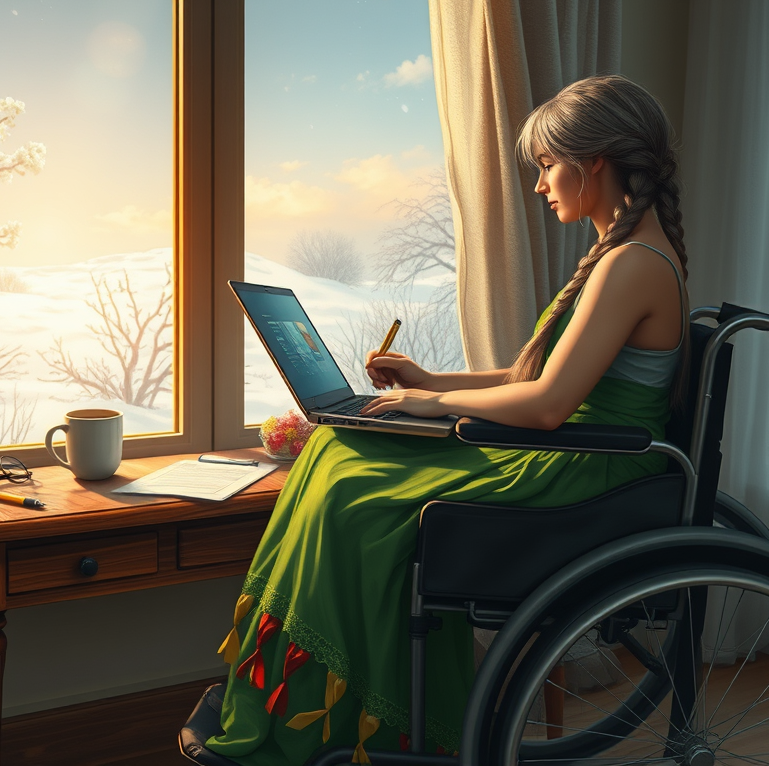
Since retiring after a car accident in 2019, I don’t have a busy social calendar. And strangely, that hasn’t felt lonely. If anything, I’ve discovered that I flourish in quiet, shared environments. Just me working on my novel or blog while a friend reads or games beside me? That’s my ideal social setting. No forced conversation. No performance. Just the soft presence of someone nearby—enough to feel connection, without needing to orchestrate it through words.
Speech isn’t automatic for me, and I’m learning that’s okay. I’m not rude. I’m not detached. I just have a brain that doesn’t default to verbal engagement unless triggered. And that’s a piece I didn’t know was missing until recently. Now, when I notice myself going non-verbal—whether for a few hours or a couple days—I don’t panic. I don’t spiral. I recognize it as part of me, not something I need to fight off or mask over.
Accepting that I’ve been masking since childhood is heavy. It’s layered. It’s sad and freeing and confusing all at once. I’m working on giving myself permission to show up as I am—even if that version of me gestures more than she speaks, prefers writing over talking, and finds peace in unspoken proximity. I am still trying to figure out what I plan on doing to adapt to this as much as possible and how to make it easier on others. I can only imagine how some will react and that is not in a good way for some. It is scary realizing something like this that shakes your entire world and then some.
Verbal masking isn’t a one-size-fits-all revelation. It’s deeply personal. Sometimes subtle. And in my case, it wasn’t discovered through a psychologist—it was unearthed through internet rabbit holes, social media reels, late-night searches with you by my side, and a Facebook post that sent ripples through decades of self-perception.
This is part two. And trust me, I’m not done talking about it—well, figuratively speaking.


I would love to hear from you!